
If you're creating content on YouTube, this question probably keeps popping up in your mind. The numbers vary wildly depending on who you ask. Some creators report earning $20+ per thousand views, while others barely scrape together a dollar.
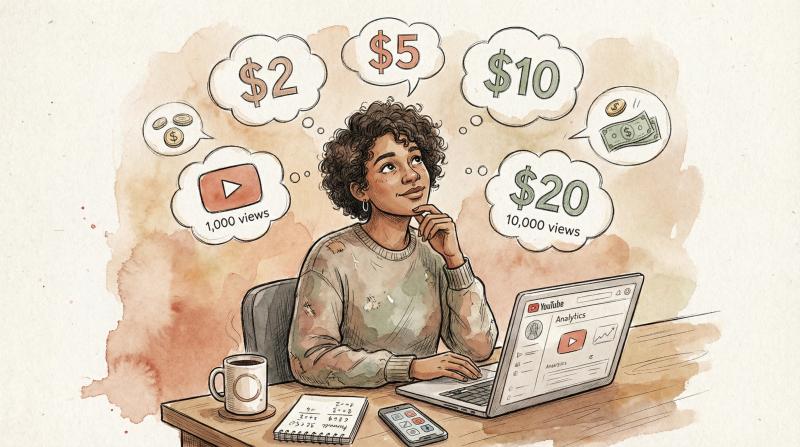
The honest answer? Most creators in 2025 earn between $2 and $10 per 1,000 video views, with $3-5 being the most common range globally. But that's just the starting point.
Your actual earnings depend on factors like your niche, audience location, video length, and how many of those views actually show ads.
Let's break down exactly how YouTube pays creators and what you can realistically expect to earn.
How Does YouTube Pay Creators?
YouTube doesn't just hand you money for views. The platform operates on an ad revenue sharing model where advertisers pay to show ads on your videos, and you get a cut of that revenue.
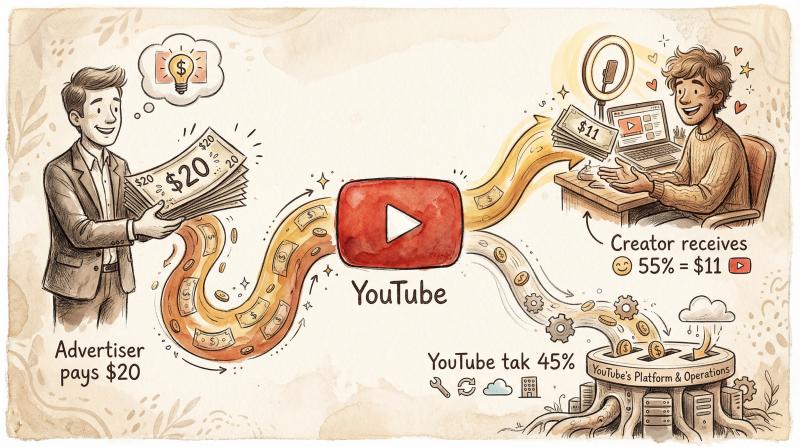
Here's how it actually works: YouTube keeps 45% of ad revenue and gives creators 55%. So if an advertiser pays $20 to show ads on your video to 1,000 people, you'd receive $11 (55% of $20).
But there's a catch.
Not every view shows an ad. Some viewers use ad blockers. Others have YouTube Premium subscriptions (which pay you differently). Sometimes YouTube simply doesn't have a suitable ad to show for that particular viewer.
This is where two critical metrics come in:
What Is CPM vs RPM on YouTube?
CPM (Cost Per Mille) is what advertisers pay per 1,000 ad impressions. According to YouTube's official documentation, this number reflects advertiser spend before YouTube's cut.
RPM (Revenue Per Mille) is what you earn per 1,000 video views after YouTube takes its share. This is the number that matters for your bank account.
Here's a real-world example: If a video shows a $20 CPM, you might only earn $4-8 RPM. Why? Because YouTube takes 45%, and only about half your views might actually show ads. Creator analytics data from 2025 confirms this gap between advertiser cost and creator earnings.
Critical insight: When someone tells you their CPM is $15, that doesn't mean they're making $15 per 1,000 views. Their actual take-home is significantly lower after YouTube's cut and accounting for non-monetized views.
YouTube Earnings Per 1,000 Views by Niche
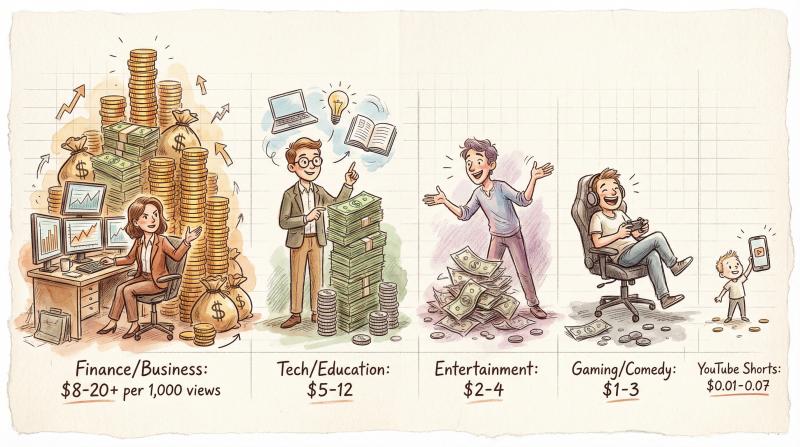
Based on industry analysis from 2025, here's what creators are actually earning:
Content Type - Typical Earnings per 1,000 Views
- Finance/Business - $8-20+
- Technology/Education - $5-12
- General Entertainment - $2-4
- Gaming/Comedy - $1-3
- YouTube Shorts - $0.01-0.07
Let's look at some specific examples.
A personal finance creator named Josh Mayo reported earning $29.30 per 1,000 views after focusing on high-value topics like credit cards and investing. That's the high end.
On the flip side, Business Insider's creator survey found some entertainment channels earning as little as $1.61 per thousand views.
The middle ground? About $5 per 1,000 views seems to be the sweet spot for general content targeting U.S. audiences. Research suggests a 10,000-view video typically earns around $60 in ad revenue, which works out to $6 per thousand.
How Much Does YouTube Shorts Pay Per 1,000 Views?
If you're creating short-form content, the numbers drop dramatically.
Recent creator reports show YouTube Shorts earning only $0.04 to $0.06 per 1,000 views. One creator got 7 million Shorts views and made about $383 total. That's roughly 5 cents per thousand views.
Why so low? The ad format between Shorts doesn't generate much revenue per view, and that revenue gets split among all creators proportionally. Shorts are fantastic for building an audience, but terrible for direct ad revenue.
What Affects YouTube Earnings Per 1,000 Views?
Several factors determine where you fall on the earnings spectrum:
1. Which Content Niches Pay the Most on YouTube?
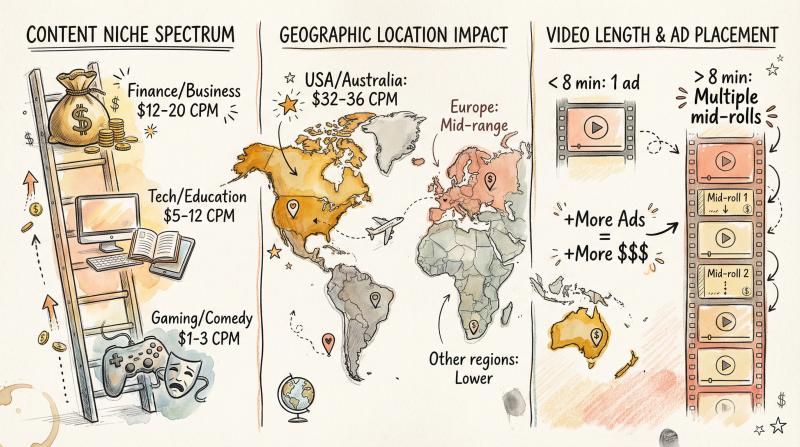
Advertisers pay wildly different rates depending on your topic. Data from 2024-2025 shows:
Content Niche - Average CPM
- Make Money Online - $13.50
- Digital Marketing - $12.50
- Personal Finance - $12.00
- Gaming - $1.40
- Comedy - $1.00
The difference isn't small. A finance video can earn 10 times more per view than a gaming video simply because financial services companies pay premium rates to reach potential customers.
2. Does Viewer Location Affect YouTube Earnings?
Geography is huge.
YouTube CPM data shows the U.S. and Australia top the charts with $32-36 CPMs, while many other countries fall far below that. If most of your audience is in the U.S., Canada, UK, or Australia, you'll earn significantly more than if your viewers are primarily in regions with lower advertising budgets.
Here's the catch: You can't force people from specific countries to watch your content. But you can create content that naturally appeals to audiences in high-CPM regions (English-language tutorials, topics relevant to Western markets, posting when U.S. viewers are online).
3. How Does Video Length Impact YouTube Revenue?
Once your video crosses 8 minutes, you can place mid-roll ads in addition to the pre-roll ad at the start.
YouTube announced in 2025 that they're optimizing ad breaks to be less interruptive while potentially increasing revenue by about 5%. A 12-minute video with 2-3 well-placed mid-roll ads can earn double what a 5-minute video earns, even with the same view count.
4. Why Does Watch Time Matter for YouTube Earnings?
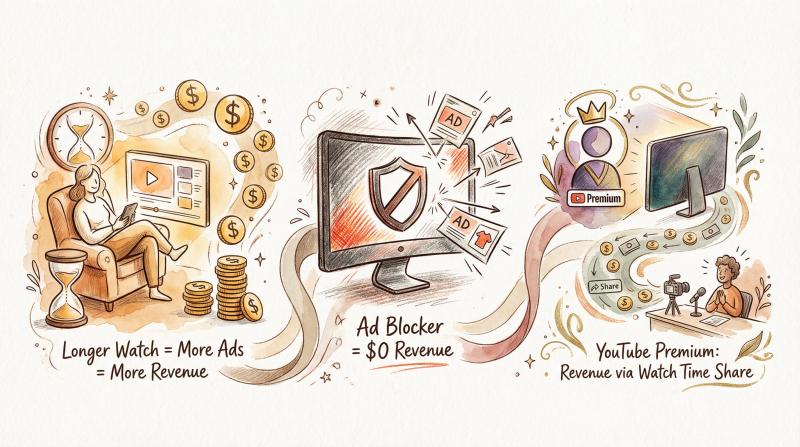
The longer viewers watch, the more ads they see.
If someone clicks away after 30 seconds, they might only see one skippable ad. If they watch your entire 15-minute video, they could see 3-4 ads. YouTube's payment system counts monetized playbacks, which means views where at least one ad was shown. Higher retention equals more ad opportunities equals more money per view.
5. How Do Ad Blockers Affect YouTube Revenue?
Not every view generates ad revenue. Some viewers use ad blockers (especially on desktop). Others have YouTube Premium subscriptions.
YouTube does pay creators from Premium subscription fees based on watch time, but some creators report this typically pays less than ad-supported views would.
When Does YouTube Start Paying You?
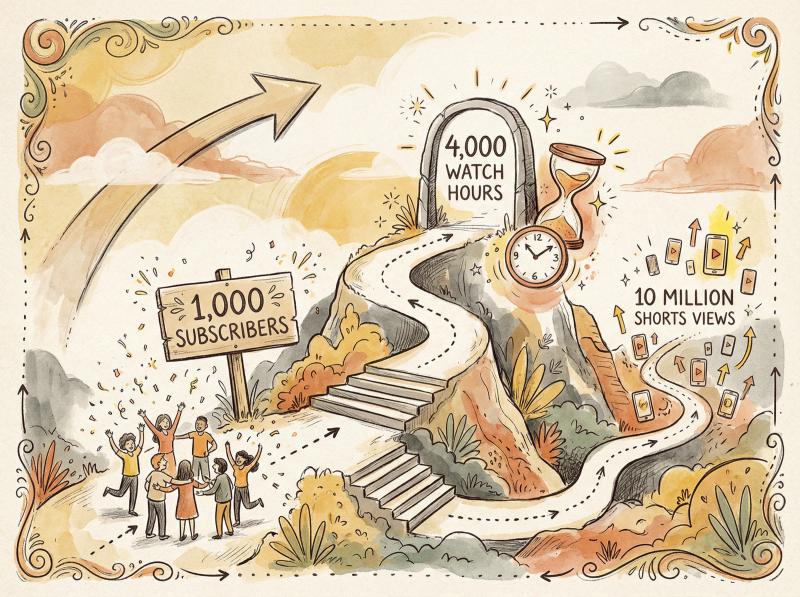
You can't monetize until you join the YouTube Partner Program. The current thresholds as of 2025 are:
For ad revenue sharing:
- 1,000 subscribers
- 4,000 watch hours in the past 12 months
OR
- 10 million valid public Shorts views in 90 days
Here's what the official YouTube Partner Program page looks like:

For early monetization features (like Super Thanks and memberships):
- 500 subscribers with lower thresholds
Until you hit these milestones, YouTube won't pay you anything from ads, regardless of your view count. If you're wondering when does YouTube start paying you, meeting these Partner Program requirements is the crucial first step.
How to Increase YouTube Earnings Per 1,000 Views
You can't directly control YouTube's algorithm or advertiser budgets. But you can optimize several factors:
How to Choose High-Paying YouTube Niches
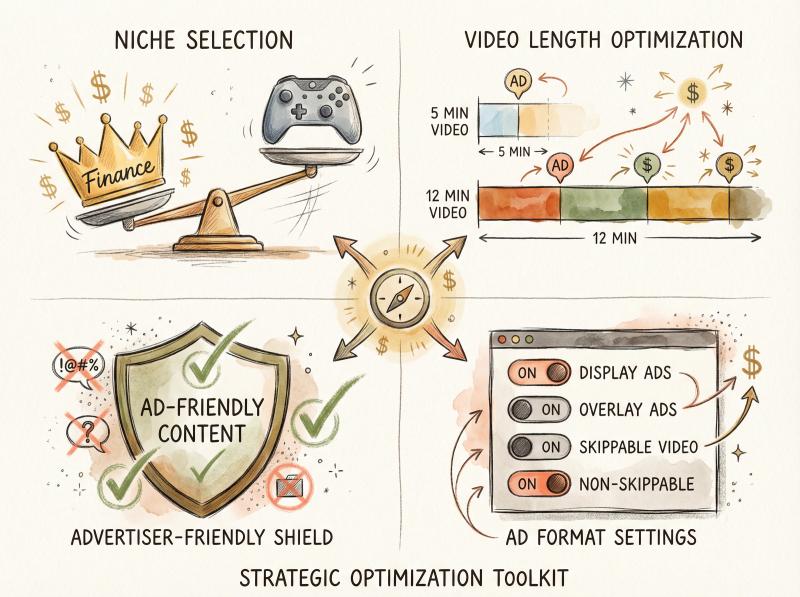
If you have flexibility in your content strategy, consider topics that attract higher ad rates.
Financial advice, business tutorials, B2B software reviews, and professional development content consistently command higher CPMs. This doesn't mean abandon your passion. But if you're choosing between two content ideas and one naturally attracts higher-paying advertisers, that's worth considering.
What Is the Best Video Length for YouTube Ad Revenue?
Aim for videos over 8 minutes when the content justifies it. Place mid-roll ads at natural transition points, not mid-sentence. YouTube's system now helps optimize ad placement for both viewer experience and revenue.
The key is keeping viewers watching. A 15-minute video where people drop off after 3 minutes won't earn more than a tight 6-minute video people watch completely.
How to Keep YouTube Videos Advertiser-Friendly
Videos that violate YouTube's advertiser-friendly content guidelines get limited or no ads. That means $0 earnings regardless of view count.
Watch your use of profanity, controversial topics, and anything that might trigger limited monetization. When in doubt, err on the side of caution.
Which Ad Formats Should You Enable on YouTube?
In your monetization settings, enable display ads, overlay ads, skippable video ads, and non-skippable ads (when appropriate for your content). More ad formats mean more opportunities for revenue.
How Do YouTubers Actually Make Money Beyond Ads?
Here's the reality: Most successful YouTube creators don't rely solely on ad revenue.
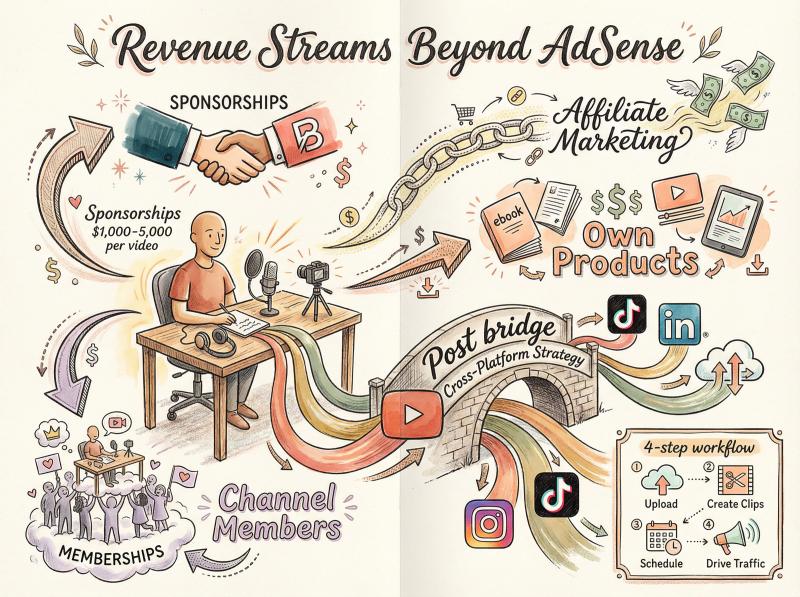
Industry data shows that top creators make more money from sponsorships, affiliate marketing, and their own products than from AdSense. Think about it this way: If you're earning $5 per 1,000 views from ads, a video with 100,000 views generates about $500. But one sponsored integration might pay $1,000-5,000 for that same video.
How Post bridge Helps YouTube Creators Grow
Growing a YouTube channel requires consistent posting. But if you're also building audiences on Instagram, TikTok, LinkedIn, and other platforms, manual posting becomes overwhelming fast.
URL: https://post-bridge.com/
Location: Post bridge Helps YouTube Creators Grow
Instructions: Capture Post bridge homepage showing the multi-platform scheduling interface and main value proposition. Use 1920x1080 viewport, hide cookie banners.
URL: https://post-bridge.com/youtube-scheduler
Location: Post bridge Helps YouTube Creators Grow
Instructions: Capture YouTube scheduler feature page showing video scheduling capabilities and Shorts auto-posting features. Use 1920x1080 viewport.
Post bridge lets you upload content once and schedule it across multiple platforms simultaneously. For YouTube creators specifically:
- 9:16 videos under 3 minutes automatically post as YouTube Shorts, making it easy to maintain a Shorts posting schedule alongside long-form content
- Schedule video releases to coincide with peak viewer times across different time zones with the YouTube scheduler
- Cross-post video teasers to Instagram Reels and TikTok to drive traffic back to your main YouTube videos
The platform starts at just $9/month for 5 connected accounts, with higher tiers for creators managing 15+ accounts. It's designed for creators who want to maximize their reach without spending hours manually uploading to each platform.
Many creators use Post bridge to amplify their YouTube content by:
① Uploading the main video to YouTube
② Creating 30-60 second teaser clips
③ Scheduling those teasers across Instagram, TikTok, Facebook, and LinkedIn
④ Driving viewers from those platforms back to the full YouTube video
More views equals more ad revenue, more sponsorship opportunities, and faster channel growth. Following social media best practices for cross-platform promotion can significantly boost your overall reach.
How Much Money Can You Realistically Make on YouTube?
Let's do some quick math with realistic numbers:
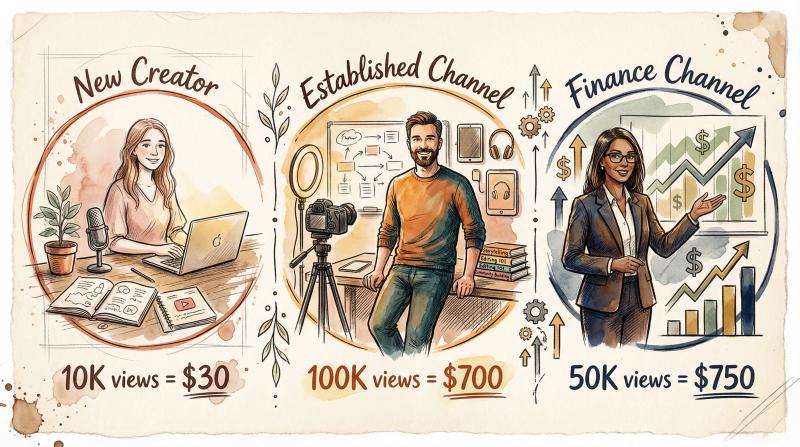
Scenario - Monthly Views - RPM - Monthly Earnings
- New Creator (General Content) - 10,000 - $3 - $30 from ads
- Established Channel (Education/Tech) - 100,000 - $7 - $700 from ads
- Finance/Business Focus - 50,000 - $15 - $750 from ads
Notice that Scenario 2 and 3 earn similar amounts despite vastly different view counts. Niche and audience quality matter as much as raw views.
According to creator surveys, 1 million views typically generates $1,200-6,000 in ad revenue depending on these variables. For most creators aiming to make YouTube their full-time income, you're looking at needing several million views per month from ads alone, or supplementing ad revenue with other income streams.
How Much Does YouTube Pay Compared to Other Platforms?
YouTube generally pays better per view than most social platforms.
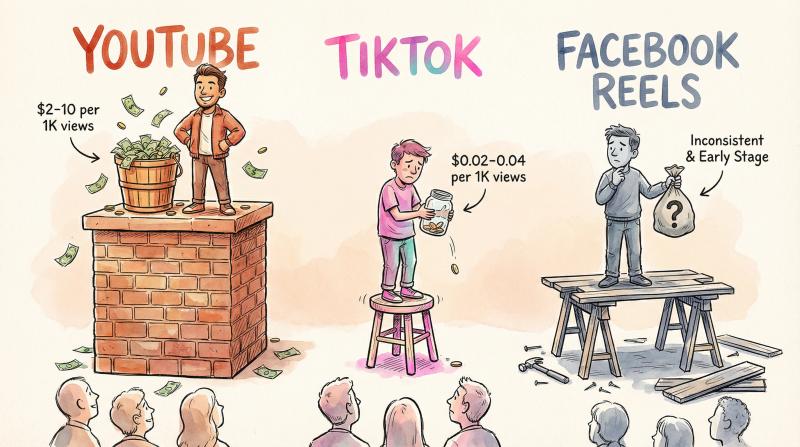
TikTok's Creator Fund used to pay only $20-40 for 1 million views (that's $0.02-0.04 per thousand). Even newer TikTok monetization programs pay a fraction of YouTube's rates.
Facebook Reels monetization is still in its early stages and pays inconsistently compared to YouTube's established model.
YouTube's combination of established ad infrastructure, multiple monetization features (ads, memberships, Super Chat, YouTube Premium), and content longevity makes it the strongest platform for direct creator earnings from views.
That said, diversifying across platforms makes sense. Use Instagram and TikTok for discovery and audience building, then convert those audiences to YouTube subscribers where you can actually monetize effectively. Learning how to go viral on Instagram or mastering your organic marketing strategy can help drive traffic to your better-monetized YouTube content.
What Are Alternative YouTube Content Strategies?
Beyond traditional vlogging and on-camera content, creators are finding success with alternative formats:

How to Make Faceless YouTube Videos
Not comfortable being on camera? Faceless YouTube videos can be just as profitable.
Many successful channels use screen recordings, animations, stock footage, or voiceovers to create engaging content without showing their face. These channels often earn the same CPMs as traditional videos since advertisers care more about your niche and audience than whether you're visible.
Does YouTube Automation Work?
Some creators explore YouTube automation strategies where they outsource video production and focus on strategy and growth. While this approach has pros and cons, it's worth understanding if you're looking to scale beyond doing everything yourself.
How to Start a YouTube Channel for Kids
If you're interested in creating content with or for younger audiences, understanding how to start a YouTube channel for kids involves additional considerations around COPPA compliance and advertiser-friendly content. Kid-focused channels can be highly profitable but require careful attention to YouTube's policies.
How to Optimize Your YouTube Videos for More Views
Getting views is only part of the equation. Optimizing your content for discovery helps maximize those views:

What Are the Best YouTube SEO Tools?
Use tools like the YouTube Tag Generator to find relevant tags that help your videos surface in search and suggested videos. The YouTube Title Checker can help you craft titles that balance SEO with click-through rates.
How to Grow Your YouTube Channel Faster
The Growth Guide offers comprehensive strategies for building your audience across platforms, including specific advice on content creation, scaling your system, and converting views to customers.
Frequently Asked Questions
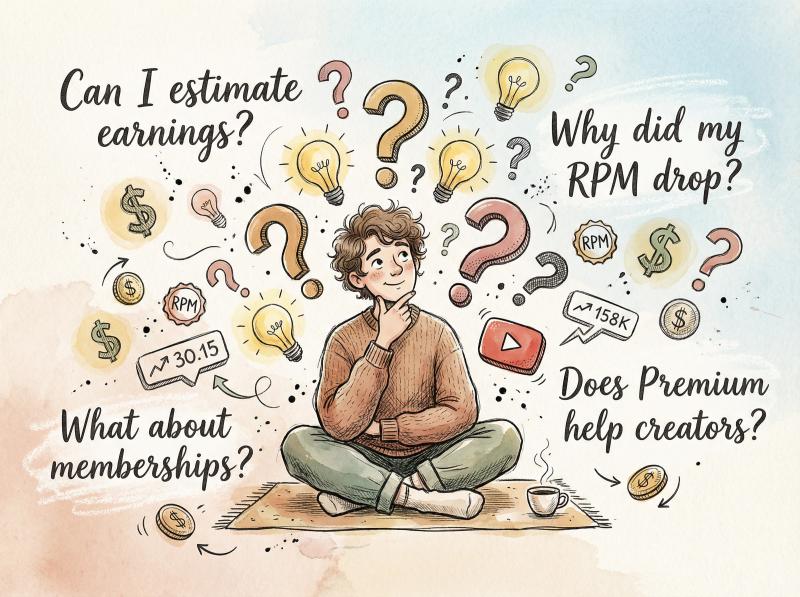
Can I just multiply my views by a dollar amount to estimate earnings?
Not really. Too many variables are at play. Your best bet is checking YouTube Studio Analytics after you've accumulated some monetized watch time. The RPM shown there is your actual per-1,000-views rate.
Why did my RPM drop even though my views increased?
Common reasons include:
- More views from lower-CPM countries
- Videos with limited monetization (accidentally hit advertiser guidelines)
- Seasonal changes (Q4 typically pays more, January drops)
- Fewer mid-roll ads on newer videos
- Shift in audience demographics
Does YouTube Premium hurt or help creators?
It helps. Premium subscribers don't see ads, but YouTube pays creators based on Premium members' watch time on their videos. While the exact rate varies, it generally compensates reasonably for the lack of ad views.
What about memberships, Super Chat, and other features?
These can significantly boost your per-viewer earnings, but YouTube keeps 30% of these revenues (compared to 45% for ads). Still, if you have engaged fans, these features can add meaningful income beyond basic ad revenue.
The Bottom Line
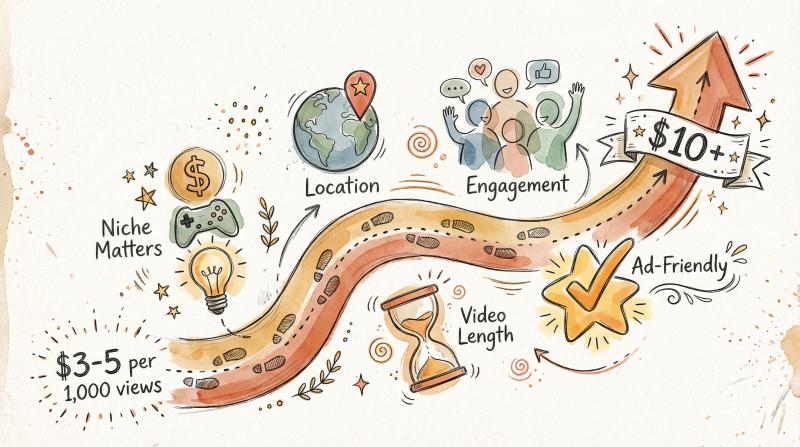
YouTube pays roughly $2-10 per 1,000 views for most creators, with the average hovering around $3-5 per thousand in 2025.
Your actual earnings depend heavily on:
- Content niche (finance pays 10x more than gaming)
- Audience location (U.S. viewers pay more)
- Video length (more ads in longer videos)
- Audience engagement (watch time matters)
- Ad-friendliness (controversial content gets limited ads)
Final takeaway: To maximize earnings, focus on creating valuable content in a lucrative niche, optimize for audience retention, and don't rely solely on ad revenue. The most successful creators treat YouTube ads as just one piece of their income puzzle, supplementing with sponsorships, products, and services.
Start by getting into the YouTube Partner Program, then focus on understanding your specific RPM through YouTube Analytics. That number will tell you exactly what 1,000 views are worth for your channel, not just theoretical averages.
And remember: even if you're only earning $3-5 per thousand views right now, with the right content strategy and audience growth, those numbers can improve dramatically over time.
Want to maintain a consistent YouTube posting schedule alongside your other social platforms? [Post bridge](https://post-bridge.com/) helps creators schedule videos, Shorts, and cross-platform content from one dashboard. Start with a free trial and see how much time you can save on content distribution.