
You've been grinding away, creating content, slowly building your YouTube channel. Then it happens – one of your videos crosses the magical 1 million views mark. The question immediately hits: "How much money did I just make?"
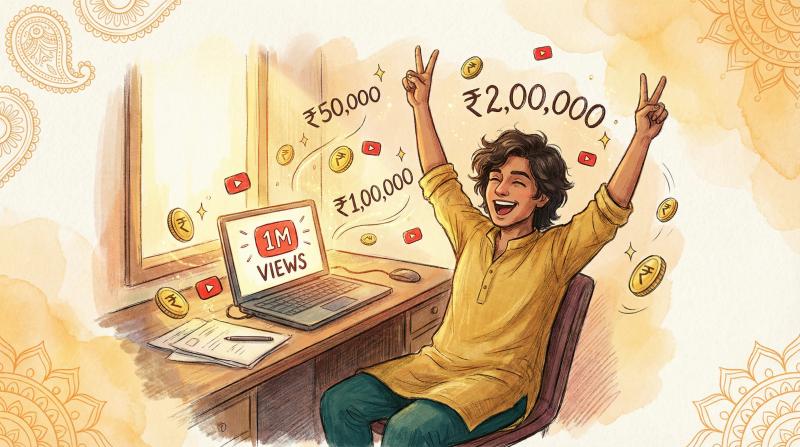
If you're an Indian creator, here's the straightforward answer: 1 million YouTube views in India typically earns between ₹50,000 and ₹2,00,000 in ad revenue. Yes, that's a wide range – and that's exactly what makes YouTube monetization so fascinating (and sometimes frustrating).
The average Indian YouTuber sees around ₹1,00,000 (₹1 lakh) for 1 million views, but your actual earnings could land anywhere in that spectrum. Why such a massive difference? Because YouTube doesn't pay a fixed rate per view. Your earnings depend on your content niche, where your viewers are located, how long they watch, and several other factors we'll break down in detail.
In this guide, you'll learn:
- Exactly what YouTube pays for 1 million views in India (with real examples)
- Why two creators with the same view count can earn vastly different amounts
- The critical difference between YouTube Shorts and long-form videos
- Proven strategies to push your earnings toward the higher end of the range
- How smart tools like Post bridge help creators maximize their time to create more high-earning content
Whether you're chasing your first million views or trying to understand what you've already earned, you're in the right place.
How Does YouTube Pay Creators in India?
Before you can earn a single rupee from YouTube, you need to join the YouTube Partner Program (YPP). The requirements are the same worldwide, including India:
- At least 1,000 subscribers
- 4,000 watch hours in the past 12 months (for long-form videos)
- OR 10 million Shorts views in the past 90 days (for Shorts creators)
- Compliance with YouTube's monetization policies
- An active AdSense account
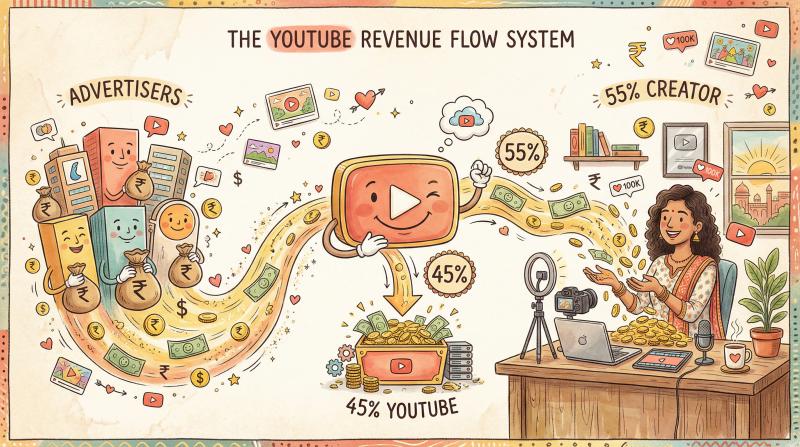
Once you're in, YouTube starts showing ads on your videos. Here's how the money flows: YouTube takes 45% of the ad revenue, and you keep 55%. So if advertisers paid ₹100 for ads on your video, your share is ₹55 (YouTube keeps ₹45).
Critical point: YouTube doesn't pay you per view of your video. You get paid per ad impression or ad engagement. Not every viewer sees an ad – some use ad blockers, some skip ads too quickly, some videos might not show ads if they're very short or flagged as not advertiser-friendly.
Typically, only about 40-80% of your views are monetized (meaning they actually generated ad revenue). This is why creators talk about "earnings per 1,000 views" rather than per single view – it's an averaged-out number that accounts for all the variables.
If you're still working toward these requirements, check out our complete guide on when does YouTube start paying you for a realistic timeline and strategies to hit these milestones faster.
What Is CPM vs RPM on YouTube?
You'll see these acronyms everywhere in YouTube monetization discussions:
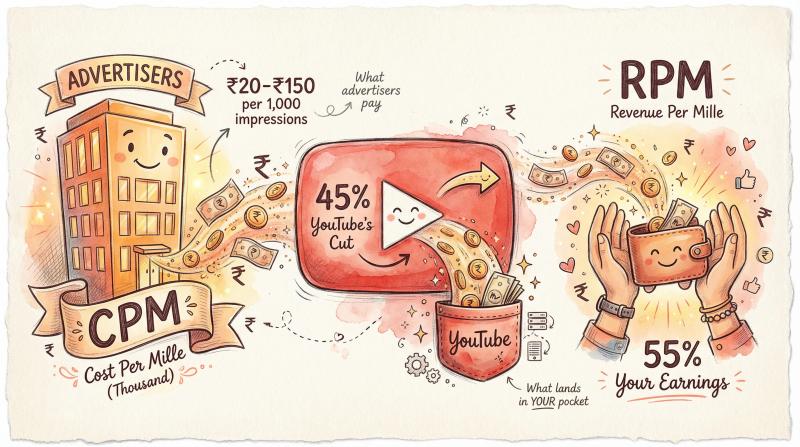
CPM (Cost Per Mille) – This is what advertisers pay per 1,000 ad impressions. In India, CPM rates typically range from ₹20 to ₹150, depending on your content and audience. CPM is about the advertiser's cost – you don't get this full amount. It's just an indicator of how valuable your ad space is to brands.
RPM (Revenue Per Mille) – This is what you actually earn per 1,000 video views. RPM factors in YouTube's 45% cut and includes all monetization sources (ads, YouTube Premium views, etc.). RPM is always lower than CPM because it accounts for YouTube's share and the fact that not every view has an ad.
Think of it this way: CPM is what advertisers pay. RPM is what lands in your pocket.
When we talk about "how much YouTube pays for 1 million views," we're really talking about your RPM multiplied by 1,000.
Example: If your RPM is ₹100, then 1,000 views = ₹100, and 1,000,000 views = ₹1,00,000.
To understand how this scales up from the foundational level, read our deep dive on how much does YouTube pay for 1000 views, which breaks down the math for every stage of channel growth.
How Much Money Do You Get for 1 Million Views on YouTube in India?
Let's get specific. As of 2025, Indian YouTube channels typically earn between ₹50 and ₹200 for every 1,000 views on monetized long-form videos.
Here's what that means for your million-view milestone:

Earning Tier - Per 1,000 Views - For 1 Million Views - When This Happens
- Lower End - ₹50 - ₹50,000 - General entertainment niche, viewers from low-ad-rate regions
- Average - ₹100 - ₹1,00,000 - Typical decent content, mixed audience, standard optimization
- Higher End - ₹200 - ₹2,00,000 - High-paying niches (finance, tech, business), significant US/UK viewers
The Lower End (₹50,000):
This happens when you're in a niche with cheaper ads (like general entertainment), or when most of your viewers are from regions with low advertiser spending.
The Average (₹1,00,000):
This is the comfortable middle ground that many Indian creators experience. A study by a Kolkata-based institute found that Indian YouTubers earn approximately ₹53.46 per 1,000 views on average, which comes out to about ₹53,460 for a million views.
That's a conservative baseline. More recent 2025 data from upGrad shows the range of ₹50 to ₹200 per 1,000 views, suggesting ₹1 lakh per million is a reasonable expectation for decent content.
The Higher End (₹2,00,000):
You hit this range when you're creating content in high-paying niches (finance, tech, business education), or when a significant portion of your audience is from countries with higher ad rates like the US or UK.
The Reality Check: These are pre-tax figures, and they're purely from YouTube ad revenue. We'll talk about taxes and additional income streams later, but for now, understand that ₹50,000 to ₹2,00,000 is your realistic earning window for 1 million views in India.
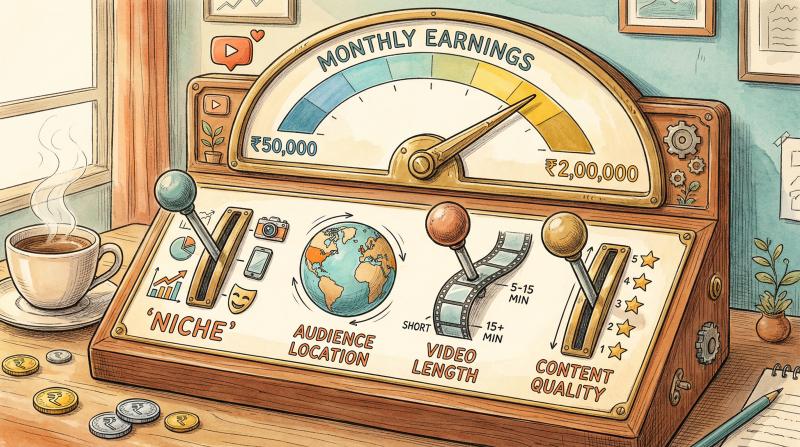
Critical insight: The massive variation in YouTube earnings isn't random luck or the algorithm playing favorites. It's based on very specific factors you can actually control and optimize. Your niche, audience location, video length, and content quality all directly impact whether you land at ₹50,000 or ₹2,00,000 for those million views.
Why Do YouTube Earnings Vary So Much? (6 Key Factors)
Two creators can both hit 1 million views and earn completely different amounts. Here's exactly why:
What YouTube Niche Pays the Most Money?
Not all topics are equal in advertisers' eyes. Finance, technology, business, and educational channels earn significantly more per view because companies in those sectors have bigger marketing budgets and are willing to pay premium rates.
Real example: A YouTuber who switched from lifestyle vlogs to finance content saw his CPM skyrocket from roughly $3 to $29 per 1,000 views. Same creator, same production quality – just a different topic that attracted higher-paying advertisers.
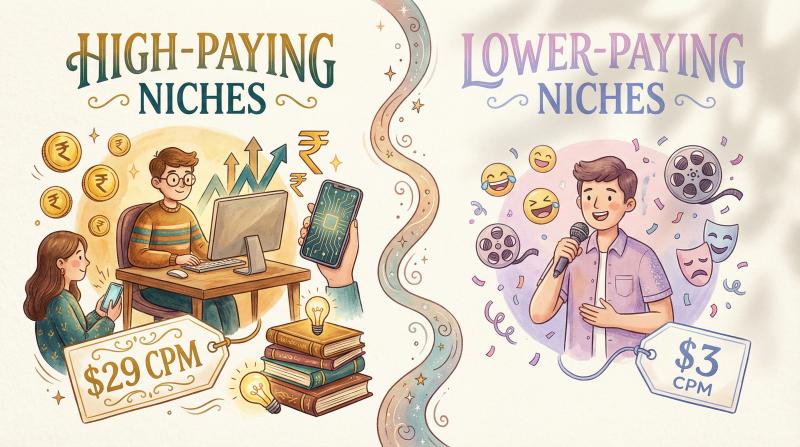
On the other hand, entertainment and comedy content has plenty of advertisers, but they typically bid lower amounts, resulting in lower payouts per view.
Your niche matters enormously. A tech review channel might earn ₹1,50,000 for 1 million views while a meme compilation channel earns ₹60,000 for the exact same number of views.
Does Viewer Location Affect YouTube Earnings?
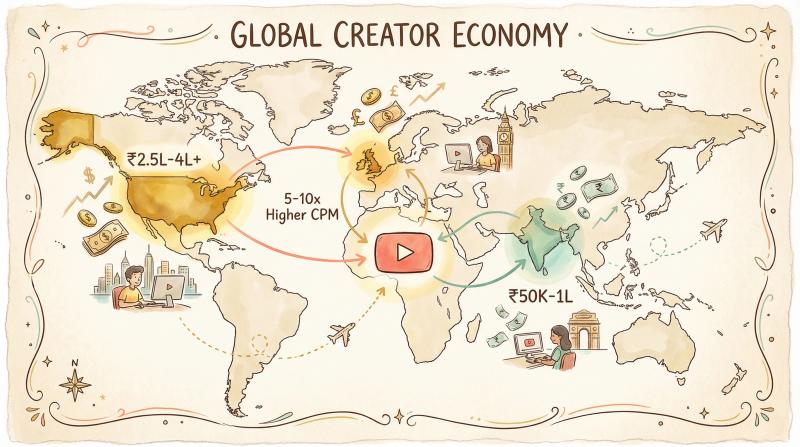
Where your viewers are located makes a massive difference. Views from the United States, UK, Canada, and other Western countries have much higher CPMs than views from India.
Even if you're an Indian creator, if a significant portion of your views come from abroad (maybe Indians living overseas, or international viewers watching English content), your RPM will rise substantially.
One analysis noted that while Indian ad rates average around ₹110-₹220 per 1,000 views, creators with substantial US/UK viewership can see much higher effective rates. In fact, 1 million views primarily from the US could earn ₹2,50,000 to ₹4,00,000+ – that's 5x more than purely Indian views at the lower end.
Conversely, a channel whose viewers are almost entirely in India (or other lower-ad-rate regions) will earn on the lower side of the spectrum.
How Do Different Ad Formats Impact YouTube Revenue?
YouTube offers various ad types:
- Skippable video ads (viewers can skip after 5 seconds – you only earn if they watch ~30 seconds or click)
- Non-skippable ads (guaranteed impression, but can annoy viewers)
- Banner and overlay ads
- Mid-roll ads (in longer videos)
If your viewers actually watch ads through or click on them, you earn more. Videos that generate high click-through rates on ads boost your revenue significantly.
Strategically placing mid-roll ads in longer videos without hurting viewer retention is an art that can multiply your earnings from the same view count.
Does Video Length Affect YouTube Earnings?
This is huge: Longer watch time equals more opportunities to show ads.
If you create a 15-minute video that keeps viewers engaged until the end, you might serve 2-3 ads to each person during that session (pre-roll, mid-roll, post-roll). That's potentially triple the revenue from a single viewing session.
In contrast, a 2-minute video has limited ad space – maybe just a pre-roll ad. Videos over 8 minutes are eligible for mid-roll ads, which is why you'll notice many YouTubers aim for that length threshold.
More ads per viewer = significantly more money from the same number of views.

When Does YouTube Pay the Most (Best Months for Ad Revenue)?
Ad rates aren't constant throughout the year. Advertisers typically spend more in Q4 (October-December) due to festive seasons and holiday shopping – this can boost CPMs substantially.
January often sees a slump in ad rates as marketing budgets reset. If your million views happen during Diwali season or around New Year, you'll likely earn more than the same million views in February.
Economic conditions also matter. During economic downturns, advertising budgets shrink, temporarily lowering CPMs across the board.
What Makes YouTube Videos Advertiser-Friendly?
Not every video gets full monetization. If your content includes profanity, controversial topics, or anything that triggers advertiser guidelines, YouTube may limit ads or show only lower-paying ads.
Family-friendly, advertiser-safe content tends to attract higher-paying premium ads. A kid-friendly science explainer might get lucrative education or tech ads, while edgy content might be stuck with remnant advertising or limited monetization.
In 2025, YouTube has been cracking down on repetitive, low-effort content. Channels that reuse content or create spammy videos risk demonetization entirely.
Adhering to YouTube's content guidelines keeps your earning potential maximized.
All these factors interact to determine your specific RPM. Understanding them helps you strategically create content that earns more per view.
What Do Indian YouTubers Actually Earn for 1 Million Views?
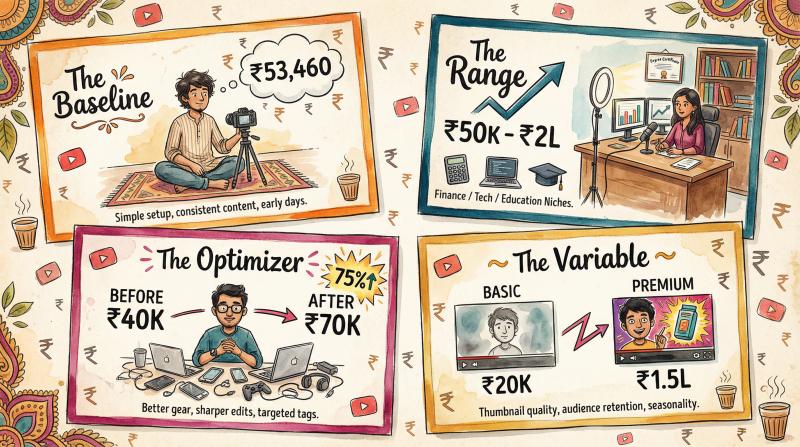
Let's look at actual reported earnings to see these numbers in action:
→ Example 1: The Conservative Baseline
A 2024 study found that Indian YouTubers earn approximately ₹53.46 per 1,000 views on average. At this rate, 1 million views = ₹53,460.
This represents a realistic starting point for typical Indian vlog or entertainment channels without special optimization.
→ Example 2: The upGrad Range (2025)
According to upGrad's 2025 analysis, "for every 1,000 views, Indian YouTubers can get between ₹50 to ₹200... so if your video hits 1 million views, your earnings could range from ₹50,000 to ₹2,00,000."
They note that channels focused on finance, tech, or education consistently earn toward the higher end.
→ Example 3: Tech Channel Improvement
One Indian tech review channel initially earned about ₹40,000 per million views. After optimizing their content – making videos more in-depth, improving engagement, and refining ad placement – they increased earnings to ₹70,000 per million views.
Game-changing realization: A 75% increase in earnings with the exact same view count, simply through strategic improvements. This proves that chasing more views isn't the only path to higher income – optimizing what you already have can be equally powerful.
→ Example 4: Same Channel, Wildly Different Videos
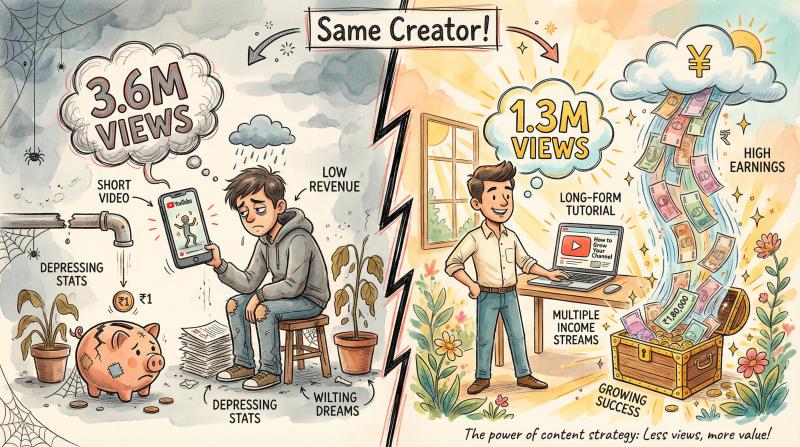
This is eye-opening. One Indian YouTuber (Algrow) shared data showing extreme variation even on their own channel:
- A short viral video with 3.6 million views earned just ₹1 (literally one rupee – likely a YouTube Short or heavily demonetized content)
- A video about "getting more YouTube subscribers" earned ₹1,80,000 from 1.3 million views (roughly ₹1,38,000 per million)
- Another "how to grow your channel" video earned ₹1,16,000 for similar views (about ₹89,000 per million)
The lesson: Educational, how-to content aimed at creators brought ₹150+ per 1,000 views, while random short-form content brought essentially nothing.
→ Example 5: High-End International Audience
For Indian creators who primarily target US audiences (through English content on global topics like investing), the earnings can be exceptional. Some finance YouTubers report RPMs of ₹1,200-₹2,400 per 1,000 views when most viewers are American.
Theoretically, ₹5,00,000+ for 1 million views is possible with this audience mix – but it's definitely not typical for India-focused creators.
These examples show why you can't just look at view counts and assume earnings. The type of content and who's watching it matters enormously.
YouTube Shorts vs Long-Form Videos: Which Pays More?
Not all views are created equal, and nowhere is this more apparent than in the difference between YouTube Shorts and traditional videos.
How Much Do YouTube Shorts Pay for 1 Million Views?
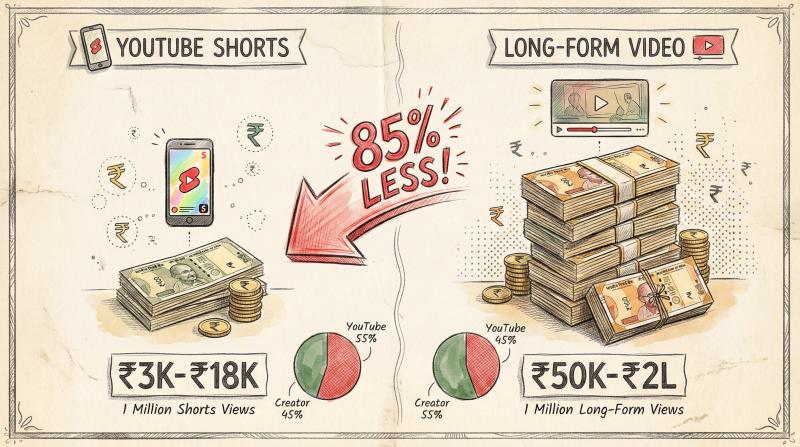
YouTube Shorts (vertical videos under 60 seconds) started sharing ad revenue with creators in February 2023. The catch? The monetization is dramatically lower than long-form content.
Shorts RPM: ₹5 to ₹30 per 1,000 views
1 million Shorts views: ₹3,000 to ₹18,000
Even at the high end of ₹30 RPM, you're earning ₹30,000 for a million Shorts views – that's 85% less than you'd earn from the same views on a 10-minute regular video.
Why so low? The ad system for Shorts is different. Ads appear between Shorts in the feed rather than on each video. Revenue is pooled and split among creators, and YouTube keeps 55% (compared to 45% for long-form content), leaving creators with only 45%.
Example: TubeBuddy reported earning about $32 for 1 million Shorts views. In India, you're looking at roughly ₹10,000-₹15,000 for the same views.
The Bottom Line: 1 million Shorts views ≠ 1 million regular video views in terms of earnings. Shorts are powerful for growth, reach, and building an audience, but they won't pay the bills unless you're racking up hundreds of millions of views.
How Much Do Long-Form YouTube Videos Pay?
Traditional YouTube videos (especially those 8+ minutes that qualify for mid-roll ads) deliver the ₹50,000 to ₹2,00,000 per million views we discussed earlier. These are your primary revenue drivers.
How Much Do YouTube Live Streams Pay?
Live stream views tend to earn lower ad revenue – roughly ₹10,000-₹25,000 for 1 million live views – because the ad experience is different and viewers join mid-stream.
However, live streams offer Super Chats and Super Stickers (where viewers pay to highlight their messages), which can supplement earnings significantly if you have an engaged audience.
What's the Best YouTube Content Strategy for Maximum Earnings?
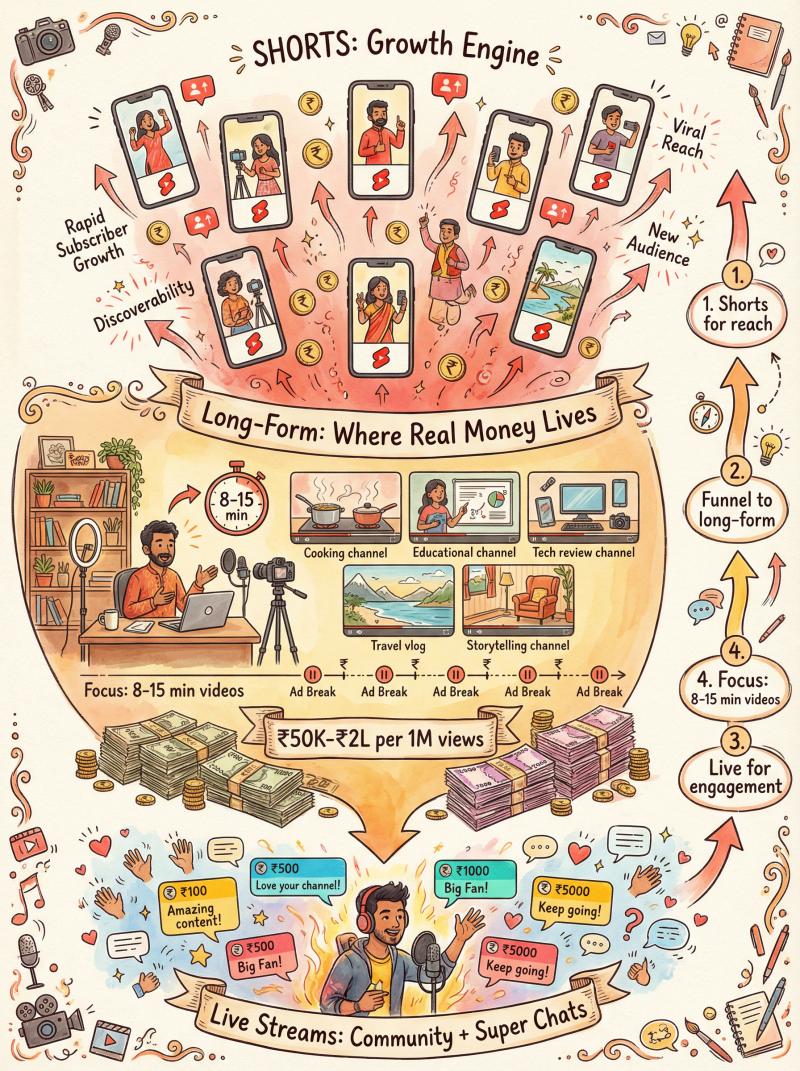
Many successful Indian creators use this formula:
- Create YouTube Shorts to grow subscribers and expand reach quickly
- Funnel that audience to long-form videos where real monetization happens
- Use live streams for community engagement and Super Chat revenue
- Focus their primary content creation effort on 8-15 minute videos for optimal ad revenue
Speaking of optimizing your workflow...
How Post Bridge Helps YouTube Creators Earn More
Screenshot Needed: Post Bridge Homepage (https://www.post-bridge.com/)
Location: This section - showcase actual product UI
Why Pending: Network firewall blocked automated capture
Instructions: See web-screenshots/captures/SC-01.md for manual capture steps
Here's a truth every YouTuber eventually learns: Your earning potential is directly tied to how much quality content you can consistently produce.
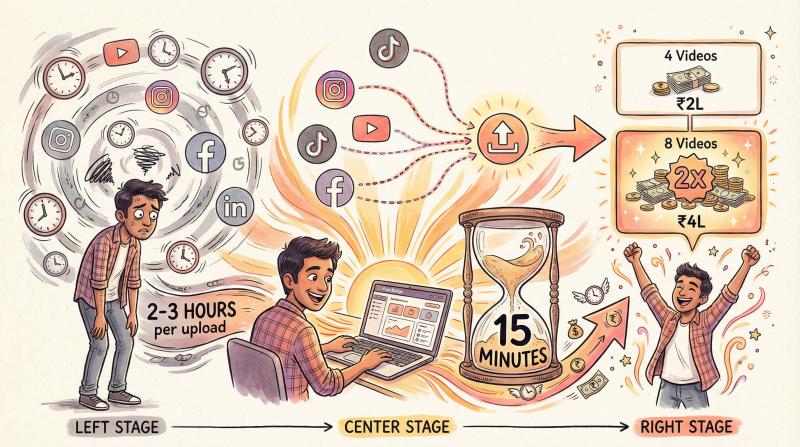
Think about it: If you can create just 4 videos per month at ₹1 lakh per million views, and each averages 500k views, you're earning ₹2 lakhs monthly. But what if you could create 8 videos per month instead? That's ₹4 lakhs – double the income from the same per-view rate.
The bottleneck isn't usually ideas or filming – it's the time-consuming process of uploading, scheduling, and posting across multiple platforms. This is where Post bridge becomes a game-changer for creators.
How to Save Hours Per Week With Multi-Platform Scheduling
Here's the typical content creator workflow without Post bridge:
- Upload video to YouTube
- Add title, description, tags
- Upload the same content to Instagram
- Upload again to Facebook
- Upload yet again to TikTok
- Post snippets on X (Twitter)
- Share on LinkedIn
For a single piece of content, you're looking at 2-3 hours of repetitive uploading and formatting work. If you're posting 2-3 times per week, that's 6-9 hours of purely administrative work that could be spent creating more content.
Post bridge lets you upload once and schedule across all platforms simultaneously. That same 2-3 hours becomes 15 minutes.
Over a month, you save 20-30 hours – that's enough time to create 2-4 additional videos.
More videos = more views = more earnings. The math is simple.
What Is YouTube Shorts Auto-Detection?
Remember how we mentioned that YouTube Shorts earn much less than regular videos? Getting this wrong can cost you money.
Post bridge includes automatic YouTube Shorts detection. Upload a 9:16 vertical video that's 3 minutes or less, and it automatically posts as a YouTube Short. Upload a 16:9 landscape video, and it goes to your main feed as a regular video.
No more accidentally posting long-form content as Shorts (losing ad revenue) or vice versa. It's handled automatically, ensuring every video type is optimized for its format.
How Does Cross-Platform Posting Grow Your YouTube Channel?

Here's a strategic insight: Growing on multiple platforms simultaneously drives more subscribers to your YouTube channel faster.
A creator who posts their best content on YouTube and cross-posts related content to Instagram Reels, TikTok, Facebook, and LinkedIn is getting discovered by 5x more potential subscribers. Each platform becomes a funnel feeding your YouTube audience.
Post bridge makes this practical. Instead of manually uploading everywhere (which most creators abandon after a week), you schedule once and reach everywhere.
More exposure = faster channel growth = hitting those million-view videos more frequently.
What Free YouTube Tools Help Get More Views?
Post bridge offers free tools specifically designed to help YouTube creators get more visibility:
- YouTube Tag Generator: AI-powered tags that help your videos rank better in search and suggested videos
- TikTok Caption Generator: Create engaging captions for cross-posted content
- Instagram Carousel Splitter: Repurpose YouTube content for Instagram

Better tags and optimization = more organic views = more ad revenue from the same content.
How to Batch Create YouTube Content Efficiently
Many successful YouTubers use a batch creation system:
- Film 4-6 videos in one day
- Edit them over 2-3 days
- Schedule them throughout the month using Post bridge
This workflow is only practical if you have a tool that can handle scheduled posting across platforms. Otherwise, you're back to manual uploads every few days, which defeats the efficiency purpose.
The Connection to Earnings: Time saved = more content created = more total views = higher monthly earnings.
If Post bridge helps you create 30% more content, and you're averaging ₹1 lakh per million views, that directly translates to 30% more income.
At just ₹9/month for the Starter plan (5 connected accounts), ₹29/month for Creator (15 accounts), or ₹49/month for Pro (unlimited accounts), Post bridge pays for itself many times over if it helps you publish even one extra video per month.
How to Increase YouTube Revenue Per 1 Million Views
Now that you understand the earning potential and have tools to maximize your content output, let's dive into specific tactics to push your earnings toward the higher end of the range:
Should You Switch to a Higher-Paying YouTube Niche?
You don't have to completely abandon your current content, but be strategic about topic selection within your niche.
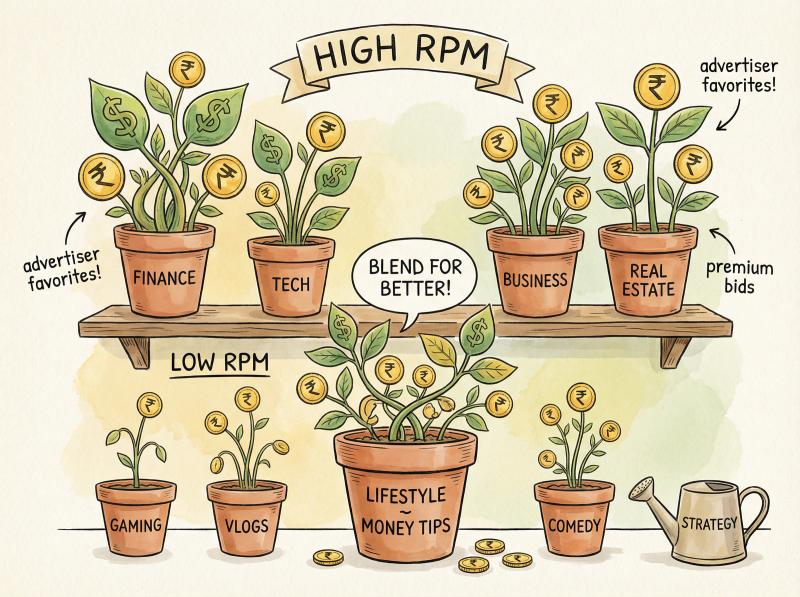
Higher-paying niches:
- Personal finance, investing, business, technology, digital marketing, B2B software, real estate, insurance, health/medical
Lower-paying niches:
- General entertainment, gaming, comedy, vlogs, reaction videos
Even within entertainment, certain topics attract better ads. A tech product review attracts tech company advertising. A general comedy sketch doesn't have specific high-bidding advertisers.
If you're versatile, consider blending topics. A lifestyle creator might incorporate personal finance tips. A tech reviewer might cover investing in tech stocks. These hybrid approaches can raise your average RPM.
What's the Best Video Length for Maximum YouTube Ad Revenue?
The 8-minute threshold is critical. Videos over 8 minutes qualify for mid-roll ads, which can nearly double your earnings from the same viewership.
But it's not just about hitting 8 minutes – it's about strategic ad placement:
- Don't stuff 5 ads into an 8-minute video; viewers will leave
- Place mid-roll ads at natural transition points or cliffhangers
- Test different placements and monitor audience retention in analytics
- Aim for 2-3 ad breaks in a 15-minute video as a sweet spot
Creators who optimize this well report 50-70% higher RPM compared to just letting YouTube auto-place ads.
How to Increase Watch Time and Engagement on YouTube
Higher engagement signals to YouTube's algorithm that your content is valuable, leading to more promotion and more views. But it also impacts earnings directly.
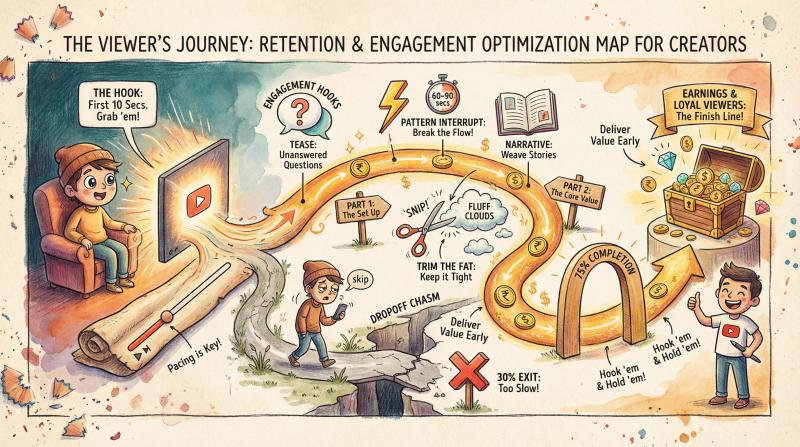
When viewers watch most of your video, you can serve multiple ads without losing them. If your 12-minute video has 75% average view duration, most viewers are seeing your mid-roll ads. If it's only 30% average view duration, they're leaving before the mid-roll hits.
Tactics to improve retention:
- Hook viewers in the first 10 seconds
- Use pattern interrupts (visual changes, examples, stories) every 60-90 seconds
- Ask questions that get answered later in the video
- Use chapters to help viewers navigate to sections they care about
- Cut unnecessary fluff ruthlessly
Why Does Video Quality Matter for YouTube Earnings?
YouTube's 2025 policies specifically target repetitive, low-effort content for demonetization. Beyond avoiding policy violations, quality content attracts premium advertisers.
A high-production-value tutorial series might have ads from major companies paying top CPM. A slideshow of recycled footage might only get remnant ads or none at all.
Invest in:
- Clear audio (even a ₹3,000 USB mic makes a huge difference)
- Good lighting (natural window light works fine)
- Solid editing (keep pacing tight)
- Genuine value or entertainment
Quality doesn't mean expensive equipment – it means delivering real value that keeps viewers engaged.
How to Use YouTube SEO to Get More Views
More views = more money. Getting to 1 million views faster (or hitting it more often) requires discoverability.
YouTube SEO basics:
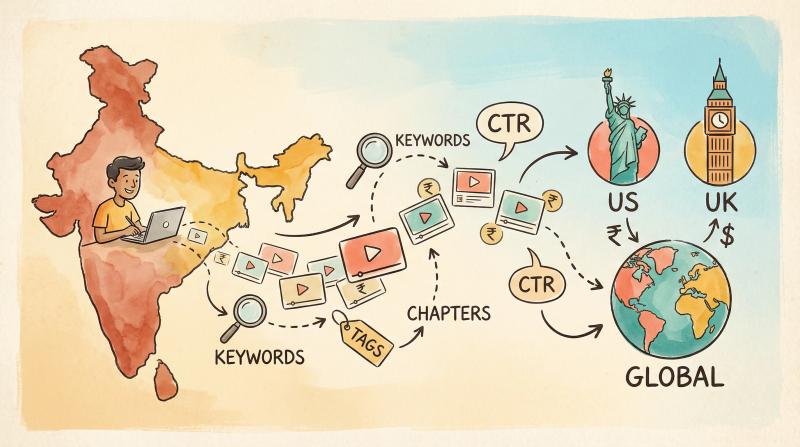
- Use the YouTube Tag Generator from Post bridge for optimized tags
- Research what people are actually searching for (Google Trends, YouTube autocomplete)
- Put your target keyword in the title, first 2 sentences of description, and tags
- Create compelling thumbnails with high contrast and readable text
- Write chapters using searchable keywords
Better SEO = more organic traffic = sustainable view growth = consistent earnings.
How to Get US and International YouTube Viewers from India
If your content is currently in Hindi or a regional language, your audience is primarily Indian. That's perfectly fine and can be highly successful.
But if you're comfortable creating in English or adding English subtitles, you can potentially attract international viewers.
Even a 10-20% shift toward US/UK viewership can significantly lift your average CPM. Some Indian creators run dual strategies:
- Main content in Hindi for the Indian audience
- Select content in English for global reach
- Or add high-quality English subtitles to expand reach
This isn't about abandoning your core audience – it's about expanding your potential viewer base strategically.
What Makes YouTube Videos Advertiser-Friendly?
Simple changes can protect your monetization:
- Avoid or bleep profanity
- Don't sensationalize controversial topics
- Follow YouTube's advertiser-friendly guidelines
- Be careful with copyrighted music or footage
"Limited monetization" videos earn a fraction of what fully monetized videos make. Keeping your content clean and compliant keeps your earning potential maximized.
How to Use YouTube Analytics to Earn More Money
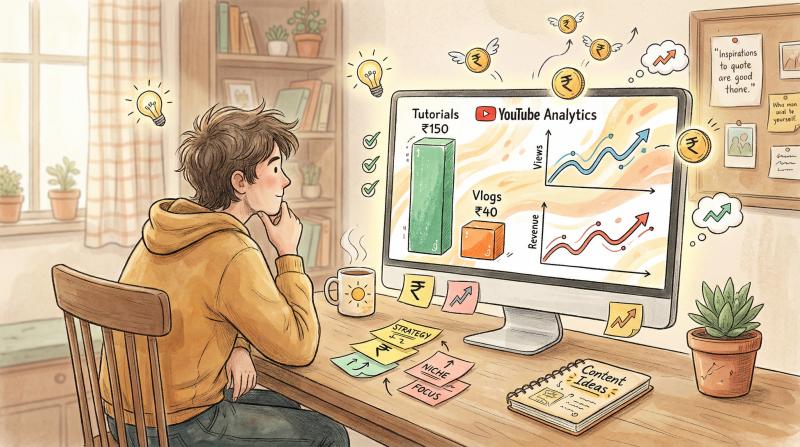
YouTube Analytics shows you the RPM for each video. This is incredibly valuable data.
If you notice your "how-to" tutorials have ₹150 RPM while your vlogs have ₹40 RPM, that's a clear signal. Create more tutorials. Even if they get slightly fewer views, they earn more per view.
Check which videos have:
- Highest RPM
- Best audience retention
- Most engagement (likes, comments, shares)
- Longest average view duration
Then create more content like those winners. This data-driven approach compounds your earnings over time.
How to Make Money on YouTube Beyond Ad Revenue

While this article focuses on what YouTube pays you through ads for 1 million views, the reality is that top creators rarely rely solely on AdSense revenue.
How Much Do YouTube Sponsorships Pay in India?
Once you have significant view counts, brands will pay you to feature their products. A tech channel with 1 million views might earn ₹1 lakh from ads, but a sponsored segment could pay an additional ₹1-2 lakhs (or more for larger channels).
Many Indian YouTubers cite sponsorships as their primary income, with AdSense being supplementary.
How Much Can You Earn From Affiliate Marketing on YouTube?
Review products and include affiliate links (Amazon Associates, Flipkart Affiliate, etc.). If even 0.5% of your viewers click through and buy, that adds meaningful income.
Example: A tech review with 1 million views earning ₹1 lakh from ads might generate another ₹30-50k in affiliate commissions from product purchases.
Can You Sell Products as a YouTuber?
Cooking channels sell recipe books. Fitness creators sell workout plans. Tech reviewers create courses.
Your million-view videos become marketing for these products, often generating more revenue than the ads themselves.
How to Build Multiple Income Streams as a Creator
Here's where Post bridge becomes even more valuable. When you're efficiently cross-posting to Instagram, TikTok, Facebook, and LinkedIn, you're building audiences on each platform.
Instagram might bring brand deals. LinkedIn might attract B2B consulting clients. Each platform becomes a revenue stream, and Post bridge makes managing all of them actually feasible.
For a comprehensive comparison of how different platforms pay creators, check out our guide on what social media platform pays the most.
You might be surprised to learn that TikTok pays significantly less than YouTube for the same view count, while Facebook Reels falls somewhere in between.
The most successful creators stack these income sources:

- YouTube AdSense: ₹1 lakh/month
- Sponsorships: ₹1.5 lakhs/month
- Affiliate income: ₹40k/month
- Digital product sales: ₹60k/month
- Total: ₹3.5 lakhs/month
All from the same content and audience. Post bridge helps you scale the multi-platform presence that makes this stacking possible.
To learn actionable strategies for amplifying your reach across all platforms and converting views to revenue, explore the free Post bridge growth guide – it's packed with proven tactics from creators who've generated 500M+ views.
YouTube Payment FAQs for Indian Creators
Do YouTubers Get Paid for Every View?
No. You get paid for ad impressions and engagements, not directly per video view.
Typically, only 40-80% of views are monetized (actually generated ad revenue). Someone using an ad blocker, or who skips an ad too quickly, doesn't contribute to your earnings.
This is why we talk about earnings per 1,000 views (RPM) – it's an averaged number that accounts for monetized and non-monetized views.
Does YouTube Pay Different Rates for Indian Creators?
YouTube doesn't explicitly pay Indian creators less – it's about audience location and advertiser bids.
If most of your viewers are in India, you get Indian market ad rates (lower than US rates). If you have a mixed audience (50% India, 30% US, 20% Middle East), your revenue is a weighted blend.
Language matters only because it influences your audience location. English channels in India can attract global viewers more easily, potentially raising earnings.
Views from the US/UK pay 5-10x more than views from India, which is why global audience creators earn so much more per view.
How Much Do 1 Million US Views Pay vs Indian Views?
1 million US views: Approximately $3,000 to $5,000 (₹2,50,000 to ₹4,00,000+). Some niches like personal finance with all US traffic can earn ~$10,000 for 1 million views.
1 million Indian views: ₹50,000 to ₹2,00,000 as we've discussed.
The disparity is stark and reflects the difference in advertising markets between countries.
Why Do YouTube Shorts Pay So Little?
Yes, Shorts pay dramatically less – roughly ₹10,000-₹15,000 for 1 million Shorts views in India.
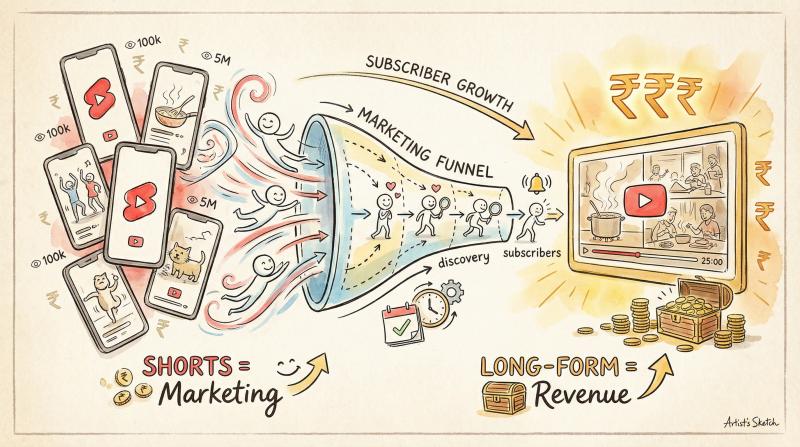
They're worth creating because:
- Growth and reach: You can rack up views much faster on 15-second viral clips than 15-minute videos
- Subscriber acquisition: Those views convert to subscribers
- Funnel to long-form: Subscribers from Shorts then watch your regular videos where real earnings happen
Think of Shorts as your marketing channel, not your primary revenue source.
When and How Does YouTube Pay Indian Creators?
YouTube pays through Google AdSense. The cycle works like this:
- Throughout January, you accumulate earnings
- Early February, YouTube finalizes January earnings and credits your AdSense account
- Late February (usually 21st-26th), AdSense pays you via bank transfer – if you crossed the $100 threshold (roughly ₹8,000)
- If you didn't hit the threshold, earnings roll over to next month
For Indian creators, AdSense automatically converts to INR and deposits directly to your bank (you provide details in AdSense settings).
There's about a 45-60 day lag between earning money and receiving it.
Are YouTube Earnings Taxable in India?
Pre-tax. Those are gross amounts YouTube pays. You're responsible for paying income tax on this money.
In India, YouTube earnings are treated as business income. You must declare them and pay tax according to your income slab.
If you earn over ₹20 lakh annually from your YouTube work, you may also need to register for GST.
For high earners, advance tax payments are required quarterly. Tax planning is crucial – set aside 20-30% of earnings for tax obligations.
AdSense may also withhold US taxes (0-30% depending on your W-8BEN filing) on US-sourced views. Consult a CA familiar with YouTuber taxes as you start earning significantly.
How to Increase YouTube Revenue Without More Views
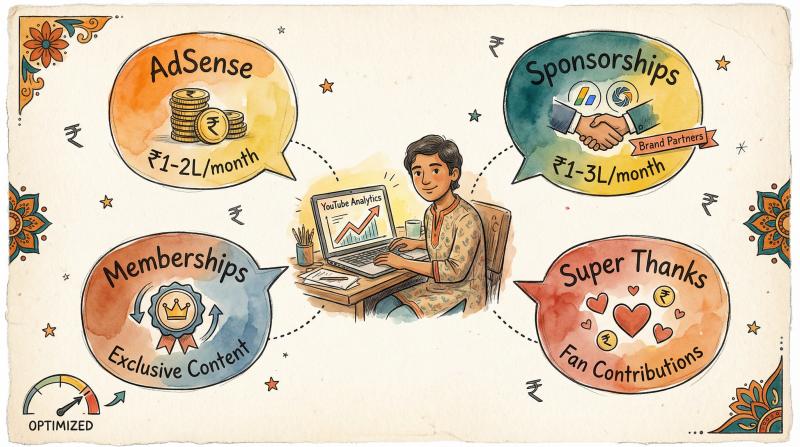
Focus on increasing your RPM:
- Shift toward higher-paying content topics
- Analyze which of your videos have highest RPM and create more of that content
- Improve audience targeting to attract viewers from higher-CPM regions
- Optimize ad placement (don't over-stuff, but don't under-utilize)
- Ensure content is fully advertiser-friendly (no limited monetization)
- Enable all monetization features (Super Thanks, memberships, etc.)
Use YouTube Analytics to identify your highest-earning videos and replicate their formula.
Can You Make YouTube a Full-Time Career in India?
It's possible but challenging purely via AdSense. Let's do the math:
1 million views per month (which requires ~33k views daily consistently) at ₹100 per 1,000 views = ₹1,00,000 monthly (~₹12 lakhs annually). That's a decent middle-class income.
But here's the reality: Most creators who go full-time on YouTube combine:
- AdSense revenue: ₹1-2 lakhs/month
- Sponsorships: ₹1-3 lakhs/month
- Other income (courses, affiliate, merchandise): ₹50k-1 lakh/month
The mix is what makes it sustainable. Relying solely on AdSense is risky because views can fluctuate.
If you have millions of subscribers and consistently get 10+ million views monthly, AdSense alone can be substantial (tens of lakhs monthly). But for most creators aiming to go full-time, diversification is key.
How to Check Your Personal YouTube RPM
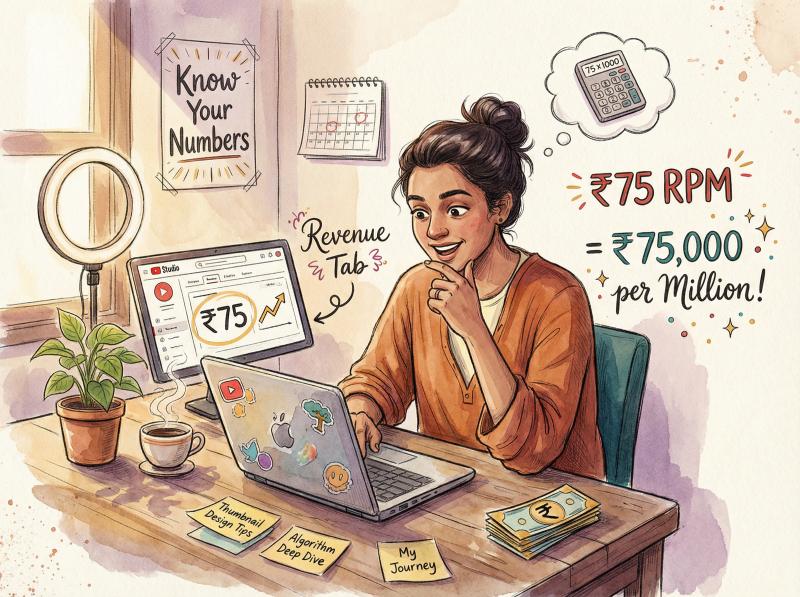
Go to your YouTube Studio Analytics:
- Click the Revenue tab
- Look for your channel's average RPM (revenue per 1,000 views)
- Multiply by 1,000 to get your earnings per million views
For example: If your RPM is ₹75, you earn ₹75,000 per million views.
You can also see RPM for individual videos, which is incredibly useful. You might discover your tutorials earn ₹150 per 1,000 views while your vlogs earn ₹30 – that's actionable intelligence for content planning.
RPM fluctuates monthly (seasonality), so look at quarterly averages for better planning.
Your Complete YouTube Earnings Action Plan
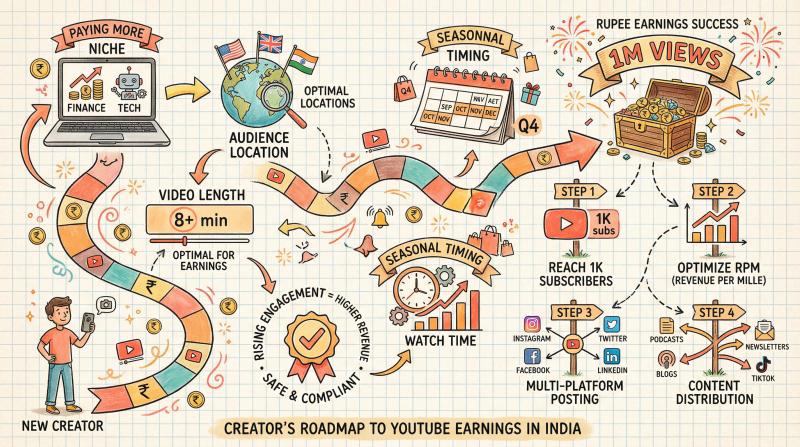
Let's bring everything together with a clear action plan.
What You Can Expect:
- ₹50,000 to ₹2,00,000 for 1 million views on long-form YouTube videos in India
- Average of around ₹1,00,000 (₹1 lakh) for decent content
- Much lower for Shorts: ₹3,000-₹18,000 for 1 million Shorts views
What Determines Your Specific Earnings:
- Content niche (finance/tech pays 2-4x more than entertainment)
- Audience location (US/UK viewers worth 5-10x more than Indian viewers)
- Video length and ad optimization (8+ minutes with mid-rolls)
- Watch time and retention (longer sessions = more ads per viewer)
- Content quality and advertiser-friendliness (premium ads vs limited monetization)
- Seasonal timing (Q4 earns more than Q1)
Your Action Steps:
Step 1: Get monetized – If you haven't yet, focus on hitting 1,000 subscribers and 4,000 watch hours to join the YouTube Partner Program.
Step 2: Optimize your content mix – Analyze your highest RPM videos and create more content like them. If certain topics or formats earn 2-3x more, lean into those.
Step 3: Maximize your time – Use Post bridge to batch-create and schedule content across platforms. The time you save on repetitive uploading can be reinvested in creating more videos or better quality content.
Step 4: Think multi-platform – Every video you create can (and should) work across YouTube, Instagram, TikTok, Facebook, and LinkedIn. Post bridge makes this practical, and each platform amplifies your total reach and earnings potential.
Step 5: Track and iterate – Watch your Analytics religiously. What's your current RPM? Which videos outperform? What's your audience retention? Use this data to continuously improve.
Step 6: Diversify income – As you grow, layer in sponsorships, affiliate marketing, and your own products. AdSense is your foundation, not your ceiling.
The Real Secret to YouTube Success in India:
Here's something most earnings guides won't tell you: The difference between a struggling YouTuber earning ₹30k/month and a thriving one earning ₹3 lakhs/month usually isn't talent or equipment.
It's consistency + efficiency + strategic thinking.
- Consistency: Posting regularly (weekly minimum)
- Efficiency: Having systems that let you create more without burning out (this is where Post bridge becomes invaluable)
- Strategic thinking: Choosing topics that pay well, optimizing for watch time, analyzing what works
You now know exactly what 1 million views pays in India. You understand why earnings vary. You have concrete strategies to maximize your per-view revenue.
The next million views you get will earn more because you're armed with this knowledge.

Ready to streamline your content workflow and create more high-earning videos? Try Post bridge free and see how much time you can save this week.
When you can batch-create and schedule an entire month of content in a few hours instead of a few days, you free up that time to focus on what actually grows your channel: creating better content.
Your first (or next) ₹1 lakh payout from YouTube is waiting. Now go create something worth watching.