
If you're trying to figure out how much Facebook actually pays for Reels views in 2025, you've probably noticed something frustrating: there's no clear answer anywhere. Some creators report earning $5 per thousand views, others say they barely make pennies, and recent headlines claim Facebook "stopped paying" entirely.
The confusion makes sense. Facebook overhauled its entire monetization system in August 2025, replacing three separate programs with one unified platform. Many creators thought payouts disappeared completely. They didn't. The system just changed dramatically.
So what's the real story? Facebook Reels currently pays most creators between $0.02 and $0.20 per 1,000 views through the new Facebook Content Monetization beta program. But your actual earnings can swing wildly outside that range depending on factors we'll break down in detail.
This guide will show you exactly how Facebook Reels monetization works in 2025, why the pay rates vary so much, and most importantly, how to build a sustainable creator income that doesn't rely on platform payouts alone.
What Changed With Facebook Reels Payments in August 2025
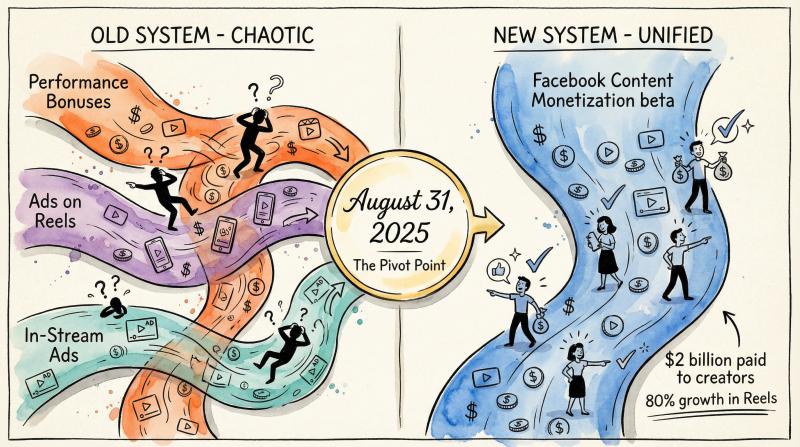
On August 31, 2025, Facebook discontinued three monetization programs that creators had been using:
Performance Bonuses (invite-only bonuses for hitting view targets)
Ads on Reels (55/45 revenue share from ads shown on your Reels)
In-Stream Ads (mid-roll ads in longer videos)
When creators saw these programs end, many assumed Facebook stopped paying for content entirely. But that's not what happened.
Facebook replaced those three separate systems with a single unified program called Facebook Content Monetization beta. Instead of juggling different earnings dashboards for Reels, videos, and bonuses, creators now see all their earnings in one place.
The new program lets you monetize Reels, Stories, photos, long-form videos, and even text posts. All payouts are calculated based on performance and engagement rather than transparent ad revenue sharing.
Is anyone actually getting paid under the new system? Yes. In fact, Facebook paid creators more than $2 billion in the past year, with Reels and short video payouts growing over 80%. The money is still flowing, it just works differently now.
Why Facebook Reels Pay Rates Vary So Much
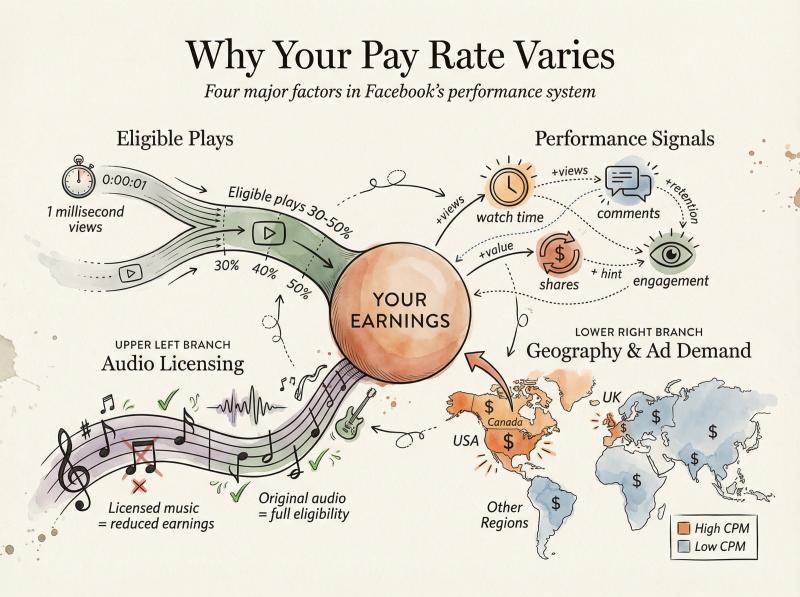
You won't find an official "Facebook pays $X per 1,000 views" number anywhere because the platform doesn't work that way. Your earnings depend on several moving variables:
Eligible Plays vs. Total Views: What Actually Counts
Facebook counts a "view" the moment your Reel plays for just 1 millisecond, and replays count. That means your total view count includes people who instantly swiped away.
Only a portion of those views are actually "eligible plays" that can generate revenue. Geography restrictions, content flags, music licensing issues, and ad suitability all reduce the pool of monetizable views.
If your content triggers limited originality flags or reuse detection, your eligible percentage drops dramatically. Many creators see 30-50% of their total views marked as ineligible.
How Facebook's Performance-Based Payout System Works
Unlike YouTube's transparent revenue share model, Facebook uses a performance-based payout system tied to engagement signals and ad demand.
Meta doesn't publish the exact formula, but it factors in watch time, shares, comments, and how many ads actually get shown and clicked on your content. Two creators with identical view counts can earn vastly different amounts based on these hidden metrics.
Viewer Geography and Ad Demand Impact on Earnings
A view from someone in the United States generates more revenue than a view from a country with lower advertising rates. If your audience is primarily in regions with low ad demand, your effective rate per thousand views will be on the lower end of the spectrum.
Advertisers also bid differently by season. Your Reels might earn more during Q4 holiday shopping than they do in January.
Music and Audio Licensing That Reduces Monetization
Using popular licensed music can reduce or eliminate monetization eligibility for your Reels. Facebook has tested allowing some licensed music to remain monetizable, but the rules are narrow and constantly evolving.
Original audio or Facebook's approved music libraries are the safest bet if you want to get the most eligible plays.
What Creators Actually Report Earning in 2025
Since Facebook won't give us a clear number, the best we can do is look at what real creators publicly share about their earnings. These aren't guarantees, just data points to set expectations:
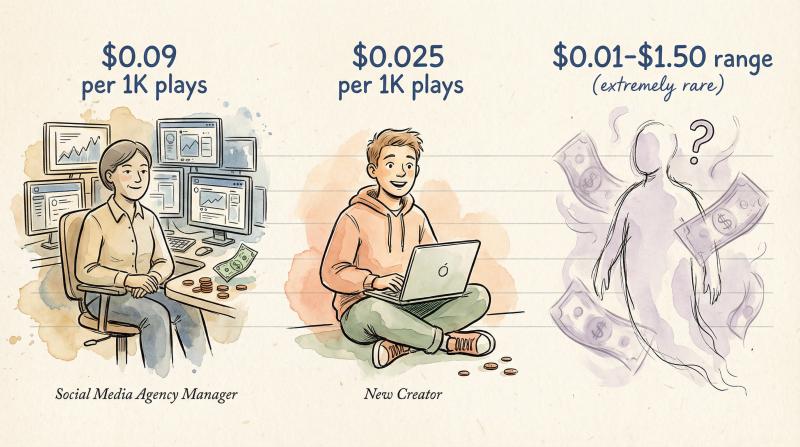
Creator Type - RPM (per 1,000 plays) - Notes
- Social media agency (beta) - ~$0.09 - Managing multiple Facebook pages in Content Monetization beta
- New creator (first month) - ~$0.025 - Newly invited to the program
- Historical Ads on Reels - $0.01 - $1.50 - Wide range, with high outliers being extremely rare
Most creators reporting their 2025 numbers fall somewhere between $0.02 and $0.20 per 1,000 plays. That's pennies, not dollars. You need hundreds of thousands or millions of views to generate meaningful income from platform payouts alone.
But that's not the full picture. Some creators with highly engaged U.S. audiences and original content report rates above $0.30 per thousand. Others with recycled content or international audiences barely clear $0.01.
How to Calculate Your Actual Facebook Reels Earnings
Instead of guessing, pull your actual numbers from your Professional Dashboard or Meta Business Suite:
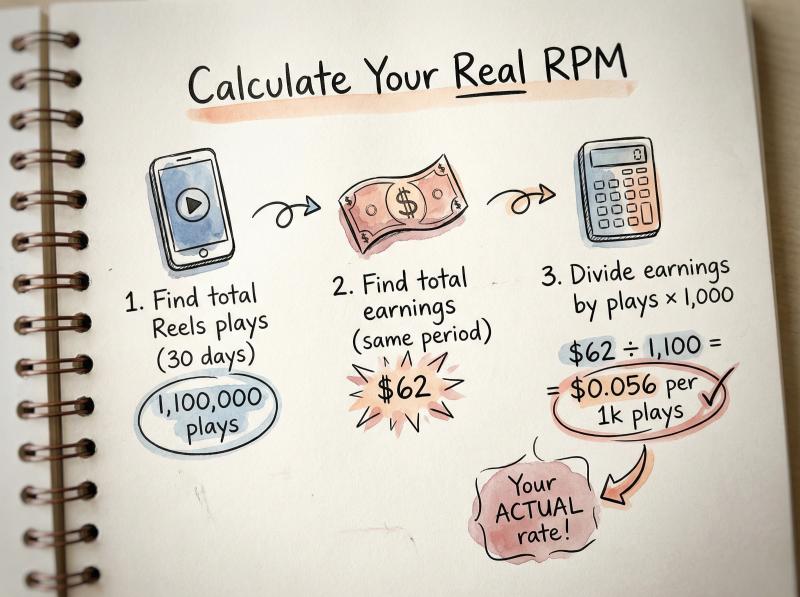
① Find your total Reels plays for the last 30 days
② Find your total earnings for the same period
③ Divide earnings by plays, then multiply by 1,000
Example calculation:
You earned $62 on 1,100,000 plays.
- $62 ÷ 1,100 = $0.056 per 1,000 plays
That's your real effective rate. Track it monthly to spot trends and understand which content drives higher earnings. If you're managing multiple accounts across Instagram, TikTok, and other platforms, centralizing your scheduling and analytics can help you identify which platforms deliver the best ROI.
If your dashboard shows eligible vs. ineligible plays, calculate what percentage of your views actually monetize. A low eligible percentage explains mysterious drops in earnings better than blaming the algorithm.
How Much Does 100,000 Views Pay on Facebook Reels?
To make these numbers concrete, here's what different RPM rates look like at various view counts:
Monthly Views - At $0.02/1k - At $0.05/1k - At $0.10/1k - At $0.20/1k
- 100,000 - $2 - $5 - $10 - $20
- 500,000 - $10 - $25 - $50 - $100
- 1,000,000 - $20 - $50 - $100 - $200
- 5,000,000 - $100 - $250 - $500 - $1,000
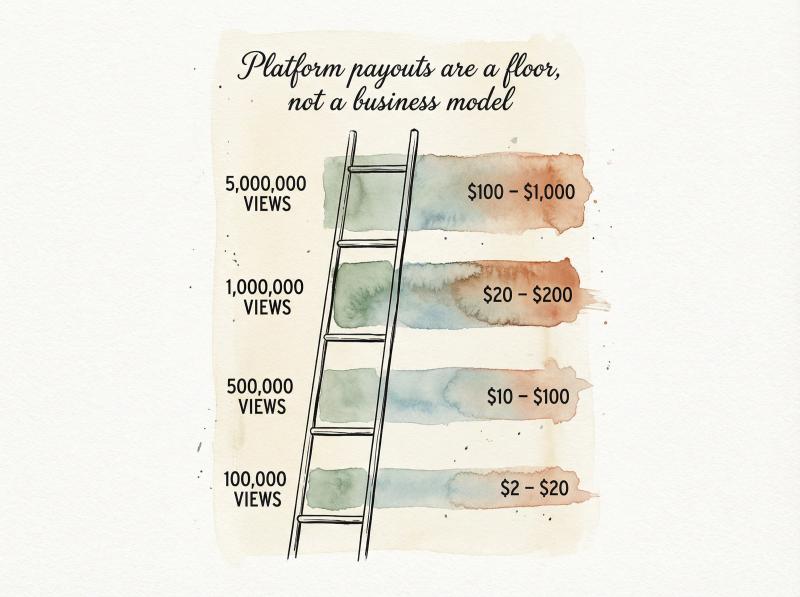
Most creators in 2025 report rates clustering toward the $0.02 to $0.10 columns. Getting to the $0.20 range requires a U.S.-heavy audience, high eligible play ratios, and strong engagement metrics.
If these numbers feel small, that's the point.
Platform payouts are a floor, not a business model.
How to Increase Your Facebook Reels Earnings Per 1,000 Views
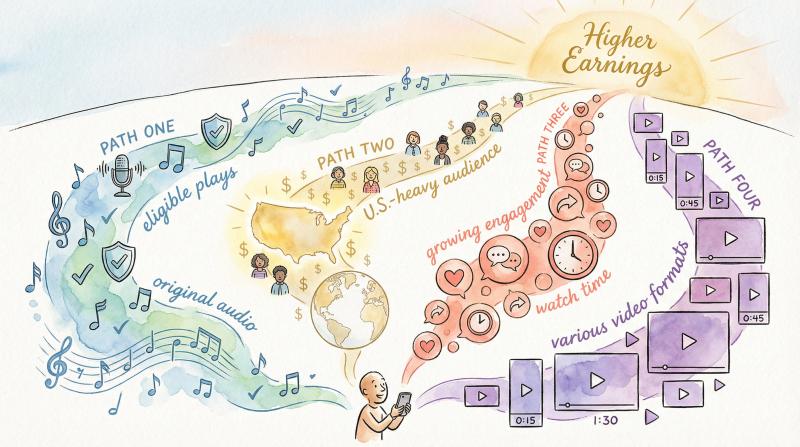
If you want to increase what you earn from Reels, focus on these areas:
① Get More Eligible Plays on Your Reels
Every piece of recycled content, questionable audio choice, or policy flag reduces your monetizable views. Facebook removes monetization access entirely for creators who repeatedly post reused or low-originality content.
Use original audio when possible. Cut anything that might trip automated filters. Check your content monetization status regularly for flags you need to address. Following social media best practices can help you avoid common content flags.
② Build a U.S.-Heavy Audience for Higher Ad Rates
If your business model allows it, create content that naturally attracts viewers from the U.S., Canada, UK, and other high-ad-value markets. You don't need to exclude other regions, just weight your distribution toward audiences advertisers pay more to reach.
Understanding how to find and grow audiences in valuable markets is critical for getting better ad revenue.
③ Improve Watch Time and Engagement on Reels
Facebook's performance-based model rewards content that keeps people watching and engaging. Longer average watch times signal quality to the algorithm and create more opportunities for ads to be served.
Ask questions in your captions. Create hooks that make people want to share. Build content that generates real comments, not just emoji reactions. Learn how to go viral on Instagram for engagement strategies that translate across platforms.
④ Test Different Content Lengths for Better Monetization
The Reels format now covers various video lengths. Longer videos that maintain high retention can carry more ad opportunities and generate better performance signals than 15-second clips everyone instantly swipes past.
Test what works for your specific audience rather than blindly following trending formats. Understanding the difference between an Instagram post vs. story vs. reel can help you choose the right format for your content goals.
Why Smart Creators Don't Rely on Platform Payouts
If you're building a real creator business, treat Facebook Reels monetization as bonus income, not your primary revenue source. Platform algorithms, payout models, and policies change constantly. What works today might disappear tomorrow.
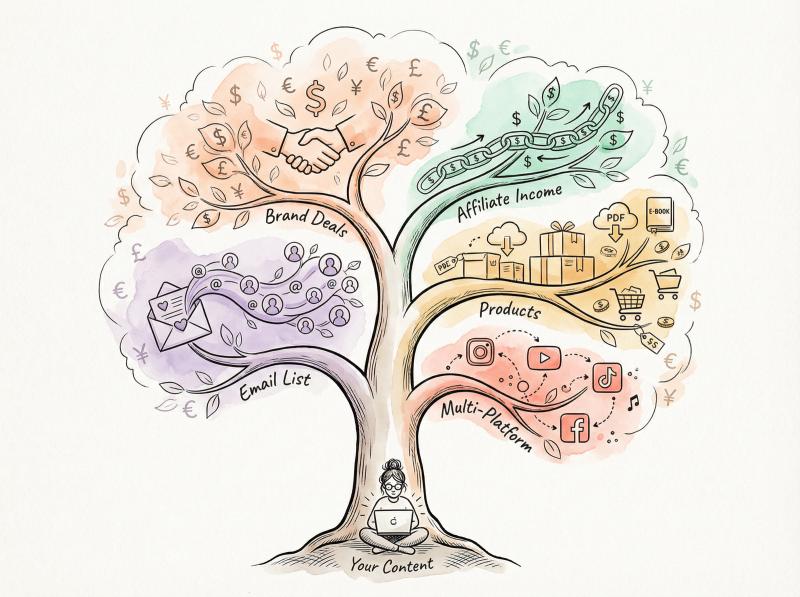
The creators making real money use Reels as a top-of-funnel tool to drive other income streams.
Here's how they do it:
→ Brand Partnerships and Sponsored Content Opportunities
A single sponsored Reel might pay more than 100,000 organic views. Build a niche audience that brands want to reach, then charge directly for access.
→ Affiliate Marketing Through Facebook Reels
Use your Reels to drive traffic to affiliate offers. Even if Facebook only pays you $20 for 100,000 views, those same views might generate hundreds in affiliate commissions if you're promoting the right products.
→ Building an Email List From Reels Viewers
Turn Reels viewers into email subscribers you actually own. Your Facebook audience can disappear if Meta changes the rules or suspends your account. Your email list stays with you.
→ Selling Your Own Products and Services
Sell courses, coaching, digital products, or physical merchandise. A Reel that gets 50,000 views and drives 10 course sales at $200 each is worth $2,000, regardless of what Facebook pays you for the views.
→ Cross-Platform Content Distribution Strategy
This is where most creators leave money on the table. You're creating content for Facebook Reels, but that same video could also perform on Instagram Reels, YouTube Shorts, TikTok, and LinkedIn.
Manually posting to every platform separately is brutal. You're essentially doing the same work five times. That's where a tool like Post bridge becomes essential.
How to Scale Across Platforms Without Losing Your Mind
Creating great content is hard enough. Manually uploading the same video to six different platforms, adjusting captions for each one, and tracking posting schedules across multiple apps is a productivity nightmare.
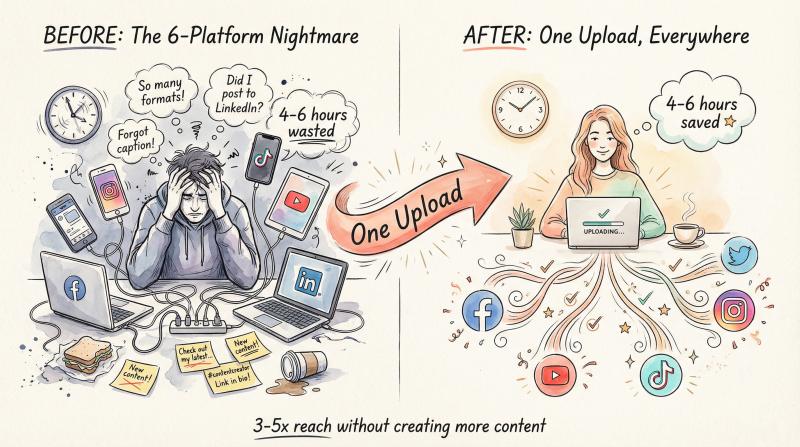
Post bridge solves exactly this problem. Upload your video once, schedule it across Facebook, Instagram, YouTube Shorts, TikTok, LinkedIn, and more with platform-specific tweaks. One workflow instead of six.
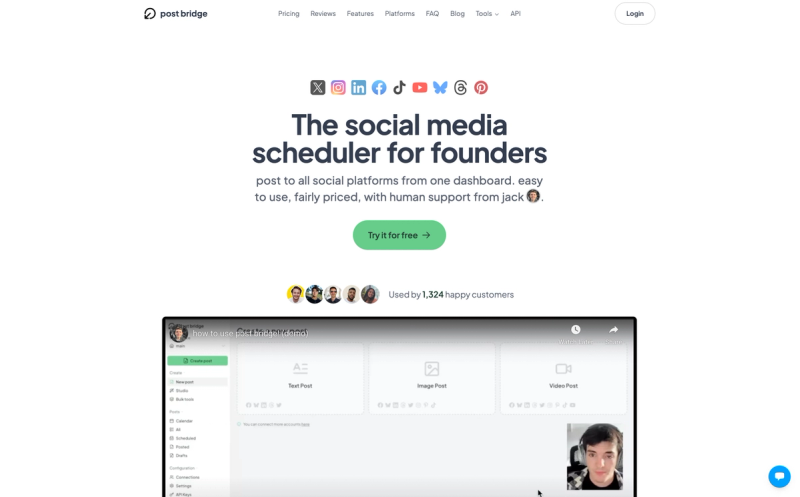
Why does this matter for Facebook Reels earnings? Because if Facebook is only paying you $0.05 per 1,000 views, you need massive scale to generate meaningful income. Cross-posting the same content to YouTube Shorts and TikTok can triple or quadruple your total reach without creating more content.
Plus, diversifying across platforms protects you from algorithm changes. When Facebook tweaks its monetization model again (and it will), your income doesn't collapse if you're also earning from YouTube Shorts revenue sharing and TikTok brand deals.
The creators using Post bridge report saving 4-6 hours per week on publishing workflows. That's time you can spend actually making content instead of copy-pasting the same video across apps. Check out our free tools to streamline other parts of your content creation process.
Check out the Post bridge Growth Guide for a complete system on finding winning content formats, warming up new accounts, and scaling reach across platforms efficiently.
How to Monetize Facebook Content Beyond Reels Views
Facebook's Content Monetization program covers more than just Reels. You can also monetize Stories, photos, longer videos, and text posts. Instead of betting everything on short-form video, build a content mix that earns together.
A few other monetization options Facebook still offers:
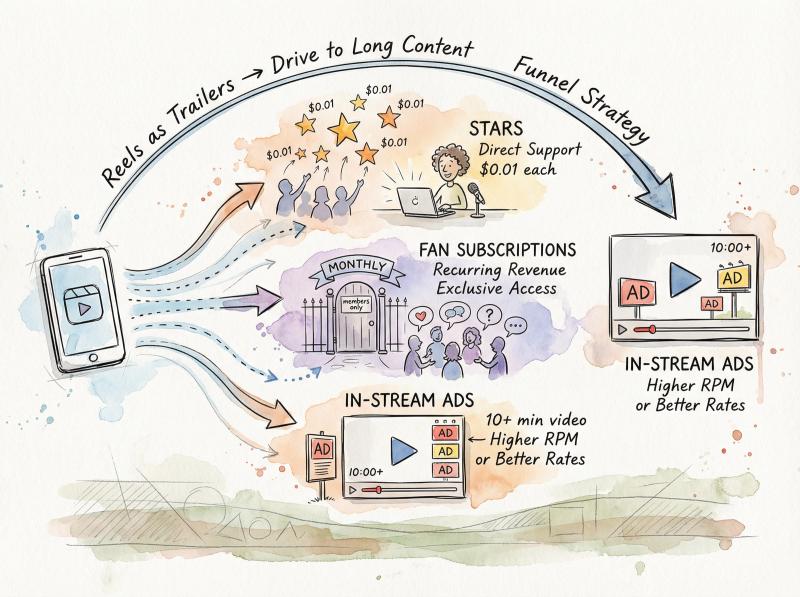
- Facebook Stars → Viewers can send Stars during live streams or video premieres. Each Star pays you $0.01 directly. It's not RPM-based, just direct support from fans.
- Fan Subscriptions → Offer exclusive content, private groups, or Q&A sessions for paying monthly subscribers. This creates predictable recurring revenue that doesn't depend on view counts.
- In-Stream Ads on Longer Videos → While Reels ads are now part of Content Monetization, you can still create longer videos (over 1 minute) that include traditional mid-roll ads. These often pay better per view than short-form content. Understanding when YouTube starts paying you provides context for how different platforms approach creator monetization.
Use your Reels as trailers that drive people to longer, better-monetized content. A 20-second teaser that gets 100,000 views and sends 5,000 people to watch a 10-minute monetized video is worth far more than the Reel itself.
Common Mistakes That Kill Your Facebook Reels Earnings
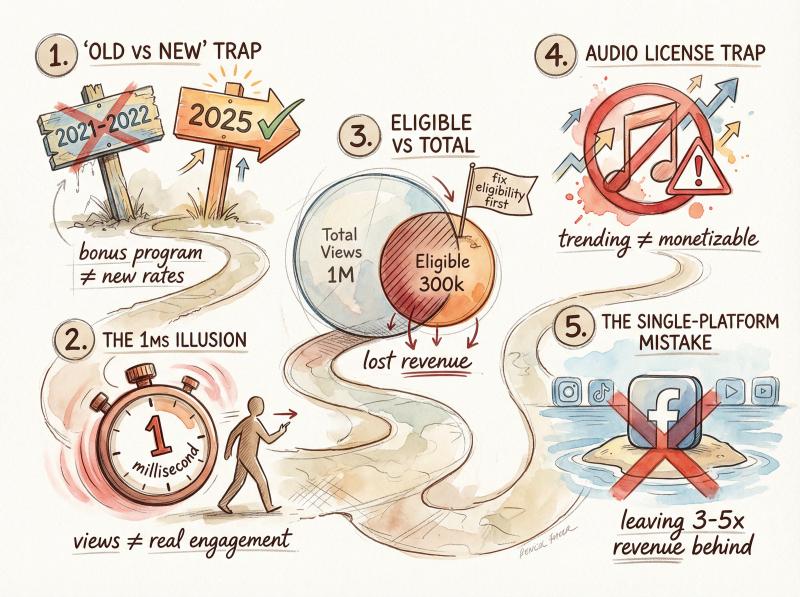
Comparing 2025 rates to old bonus program stories
The Reels Play Bonus program from 2021-2022 paid differently than today's Content Monetization. Stop using those numbers as your baseline.
Ignoring the view definition change
Facebook counts views at 1 millisecond and includes replays. "1 million views" in 2025 doesn't mean the same thing as "1 million 3-second views" from traditional video metrics.
Chasing views instead of eligible views
If your content has originality issues, you might get 1 million total views but only 300,000 eligible plays. Fix eligibility first before worrying about reach. Check your Instagram username availability and other platform handles to ensure brand consistency across your growing presence.
Using random trending audio without checking licensing
Popular songs might boost your views but kill your earnings if they're not monetization-approved.
Posting only on Facebook
You're leaving 3-5x more revenue on the table by not cross-posting to other short-form platforms.
What to Expect From Facebook Reels Monetization in 2026
Facebook's Content Monetization program is still in beta and invite-only. Not every creator who meets the requirements has access yet. If you don't see the option in your dashboard, you're likely in the queue waiting for broader rollout.
The requirements as of late 2025 include 10,000 followers and 600,000 minutes of total watch time in the last 60 days across all your content. You can't apply directly, Facebook invites eligible creators.
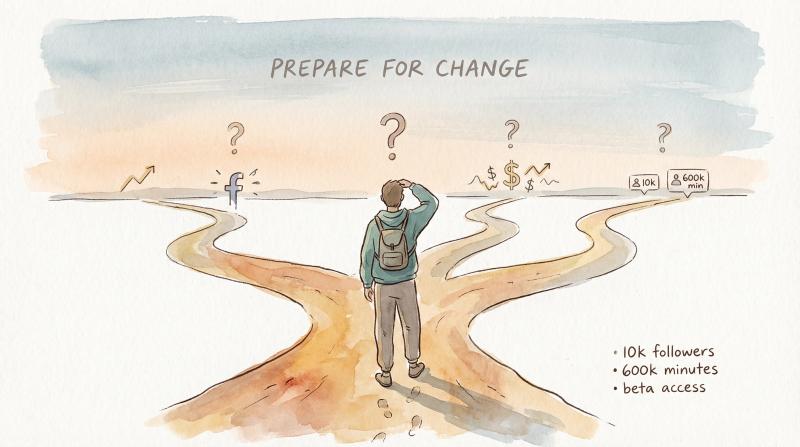
Expect the payout model and rates to keep evolving. Meta is clearly trying to balance creator payments with profitability. The shift from transparent revenue shares to performance-based pools already cut many creators' earnings by 80% overnight in late 2023.
Build a business that can weather those changes. If Facebook cuts rates again or ends the program entirely, you should have multiple income sources that keep you stable.
The Bottom Line on Facebook Reels Pay Rates
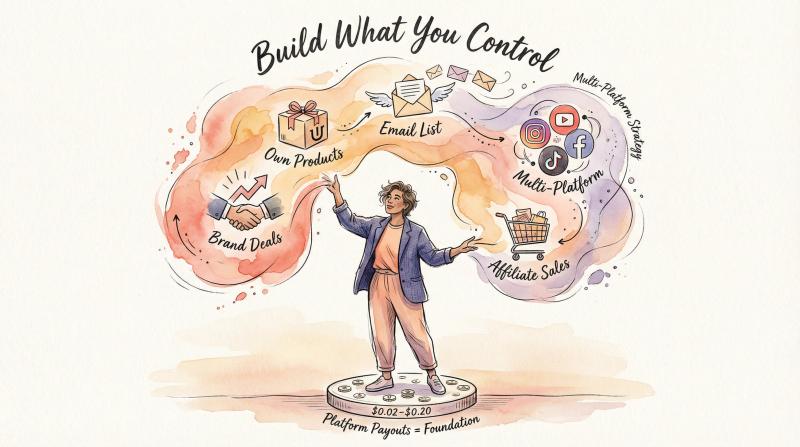
There is no single "Facebook pays $X per 1,000 views" answer because the platform uses a variable performance-based model. Most creators in 2025 earn between $0.02 and $0.20 per 1,000 plays on Reels, with huge variance based on eligible play ratios, viewer geography, and engagement quality.
If you're getting 100,000 views per month, expect somewhere between $2 and $20 from Content Monetization alone. That's why smart creators use Reels as audience-building tools that feed other monetization streams, not as the primary income source.
Calculate your own effective rate using your dashboard numbers. Track it monthly to understand what's actually working. Focus on getting more eligible plays by using original content and approved audio.
The creators making real money in 2025 aren't the ones chasing Facebook's pennies per view. They're the ones building real businesses, owning their audiences, and treating platform payouts as nice bonuses while their actual income comes from offers they control.
Most importantly, stop limiting yourself to one platform. The same video you post to Facebook Reels can also run on Instagram, YouTube Shorts, TikTok, and LinkedIn. Tools like Post bridge make cross-platform distribution simple so you can 3-5x your total reach without creating more content.
Focus on eligible views, fix your content quality issues, and build a multi-platform presence. The views will pay more when you have the fundamentals right. Check out Post bridge's pricing to see how affordable it is to set up cross-platform posting and reclaim hours each week.